EU Green Week partner event: Digital Innovations for Soil Health
WHEATWATCHER co-organised an online EU Green Week Partner Event “Digital Innovations for Soil Health”, organised in the framework of EU Green Week 2026.
The event brought together four European research and innovation projects, WHEATWATCHER, STELLA, E-SPFdigit and NitroScope, to explore how digital technologies can contribute to healthier soils, sustainable agriculture and more informed decision making in the field.
The webinar was held online on 3 June 2026 and focused on the role of digital tools, soil sensing technologies, stakeholder engagement and multi sensor platforms in supporting soil health monitoring and sustainable farming practices.
EU Green Week 2026 is focused this year on the theme “Investing in nature”, highlighting the importance of nature based action, resilient ecosystems and sustainable development. In this context, the webinar underlined the essential role of healthy soils as a foundation for food production, biodiversity, climate resilience and rural prosperity.
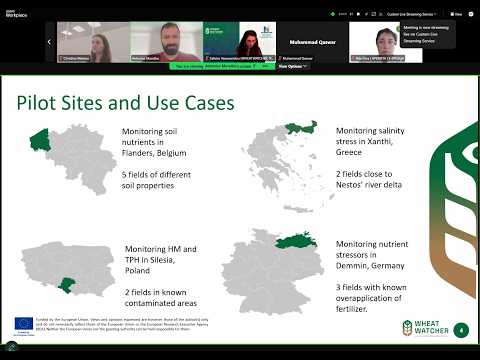
During the webinar, our scientific coordinator, Antonios Morellos from Ghent University, presented the project’s work on proximal soil sensing for fertility zone delineation in wheat fields. His presentation explained how WHEATWATCHER is developing an integrated digital monitoring system for wheat production, linking soil health, plant health and food traceability from field growth to flour production.
Collaboration across EU Mission Soil projects
The webinar demonstrated the value of collaboration across projects working within the broader soil health and digital agriculture ecosystem.
Each project contributed a different perspective:
WHEATWATCHER focused on proximal soil sensing and fertility zone delineation in wheat fields.
STELLA presented data driven tools for pest surveillance and agricultural decision support.
E-SPF Digit highlighted stakeholder needs and adoption challenges for on site digital soil monitoring.
NitroScope presented high resolution soil sensing approaches for sustainable nitrogen management.
The discussion showed that digital innovation is not only about developing advanced technologies. It is also about ensuring that these tools are reliable, understandable, validated and useful for real decisions in the field.