Tag: Decision Support System

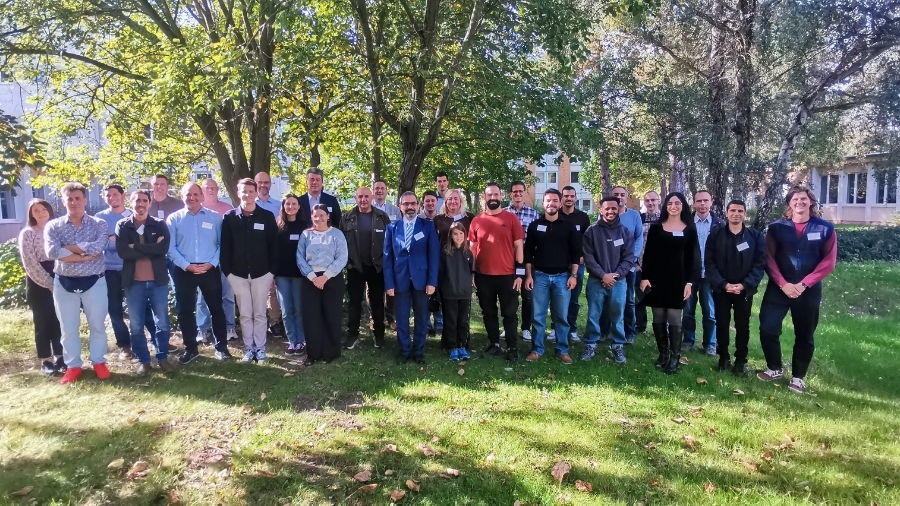
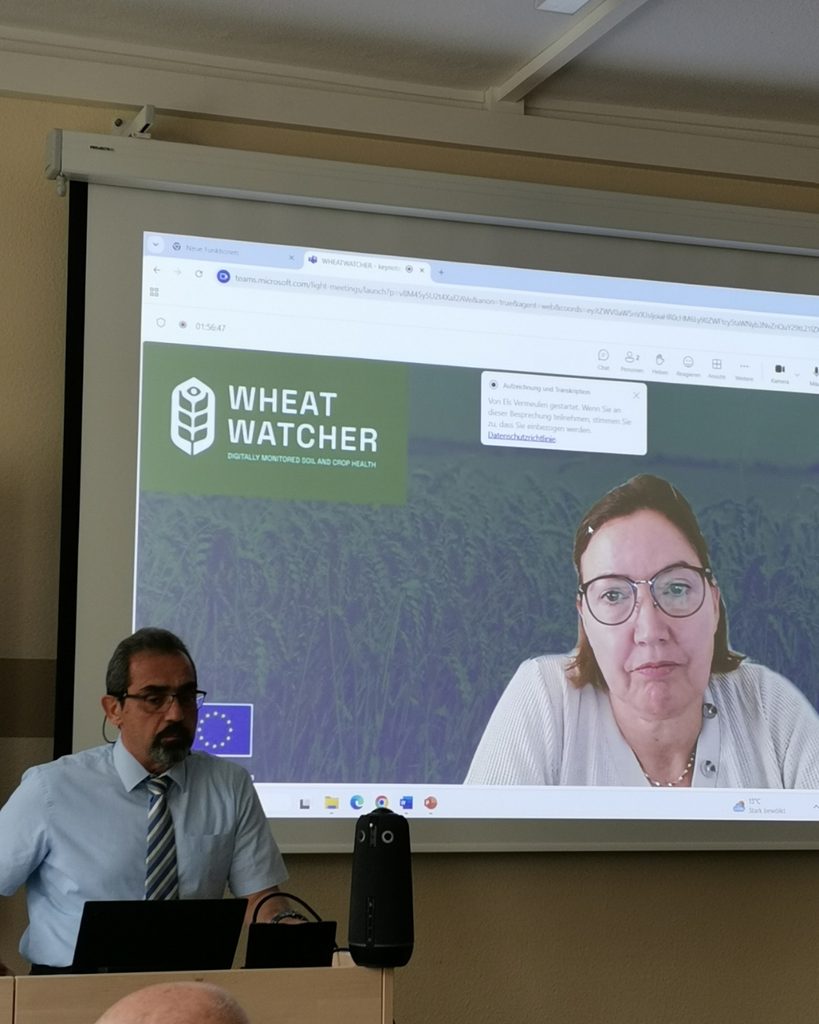
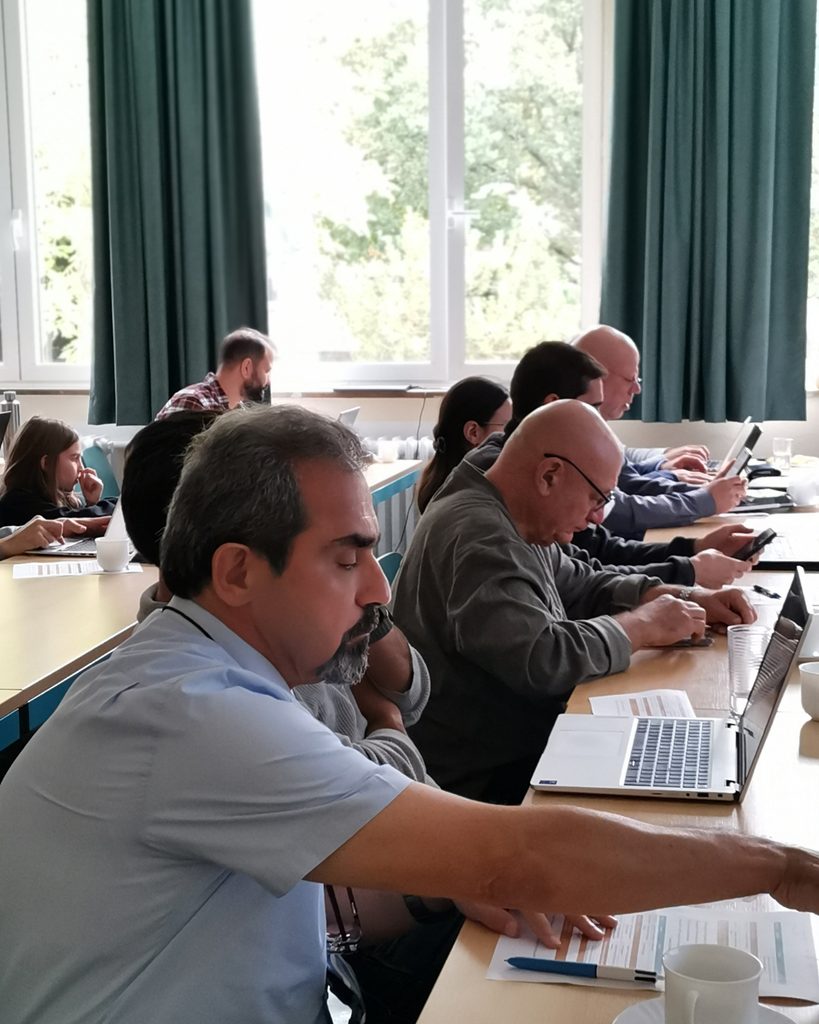
WHEATWATCHER consortium partners during the 2026 project meeting in Rostock, Germany.

WHEATWATCHER Consortium Meeting in Rostock, Germany

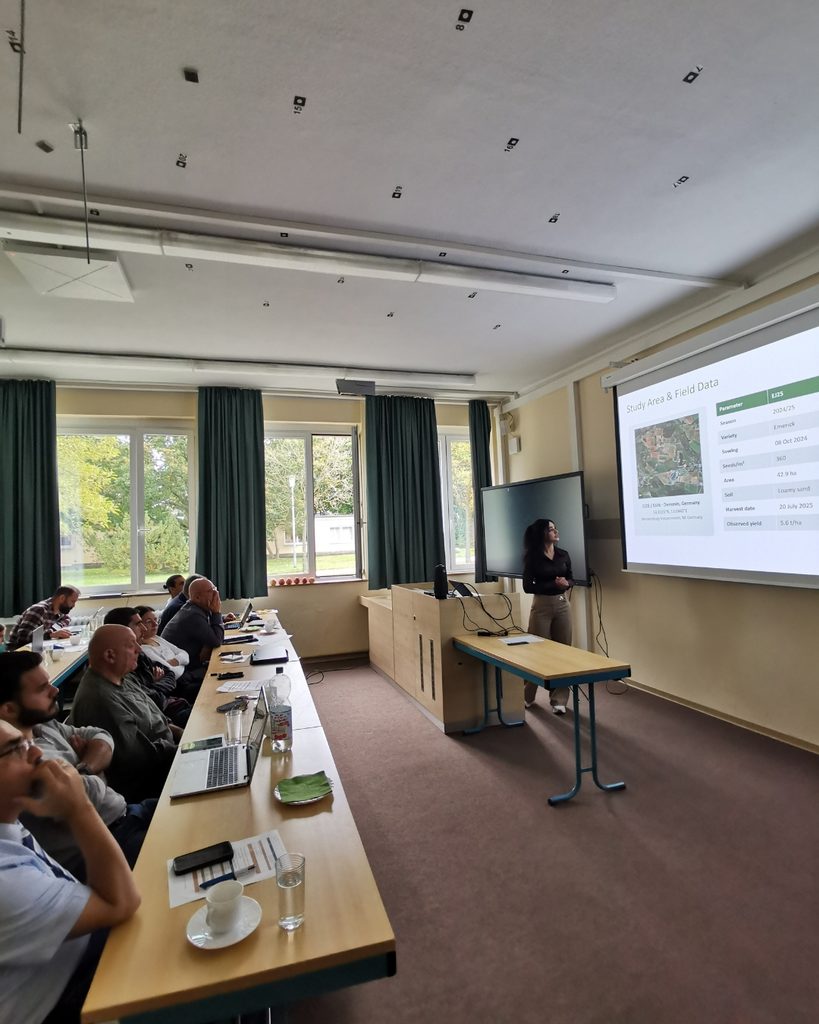
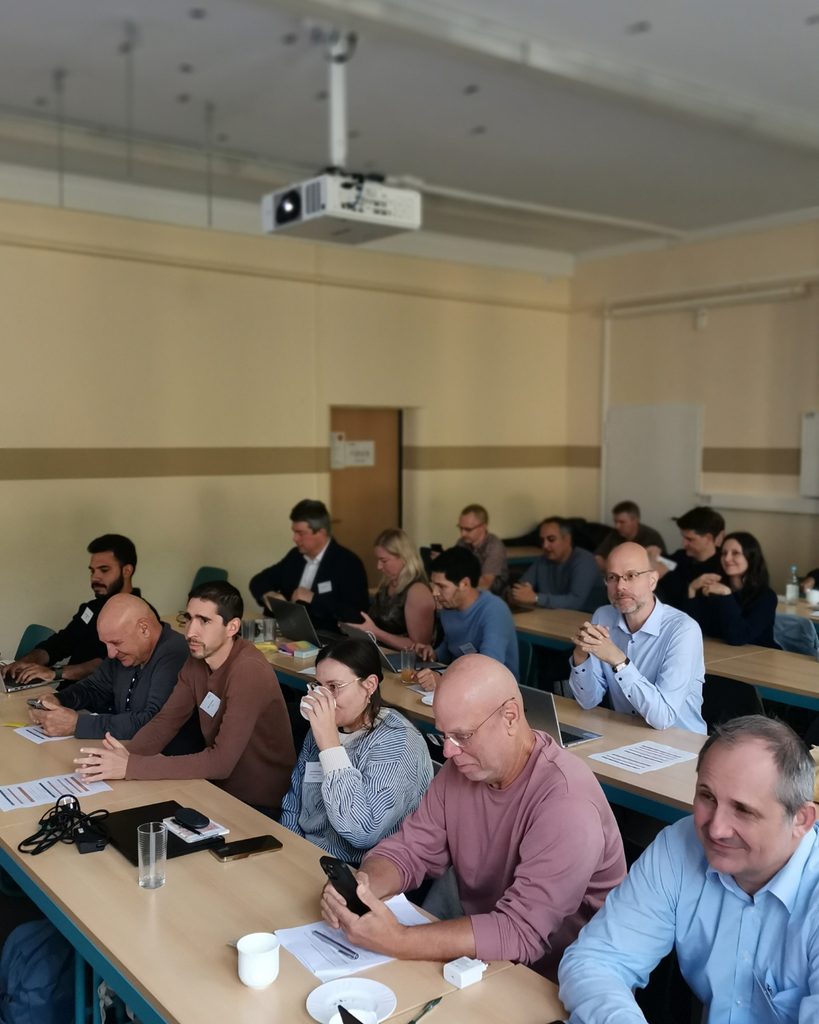
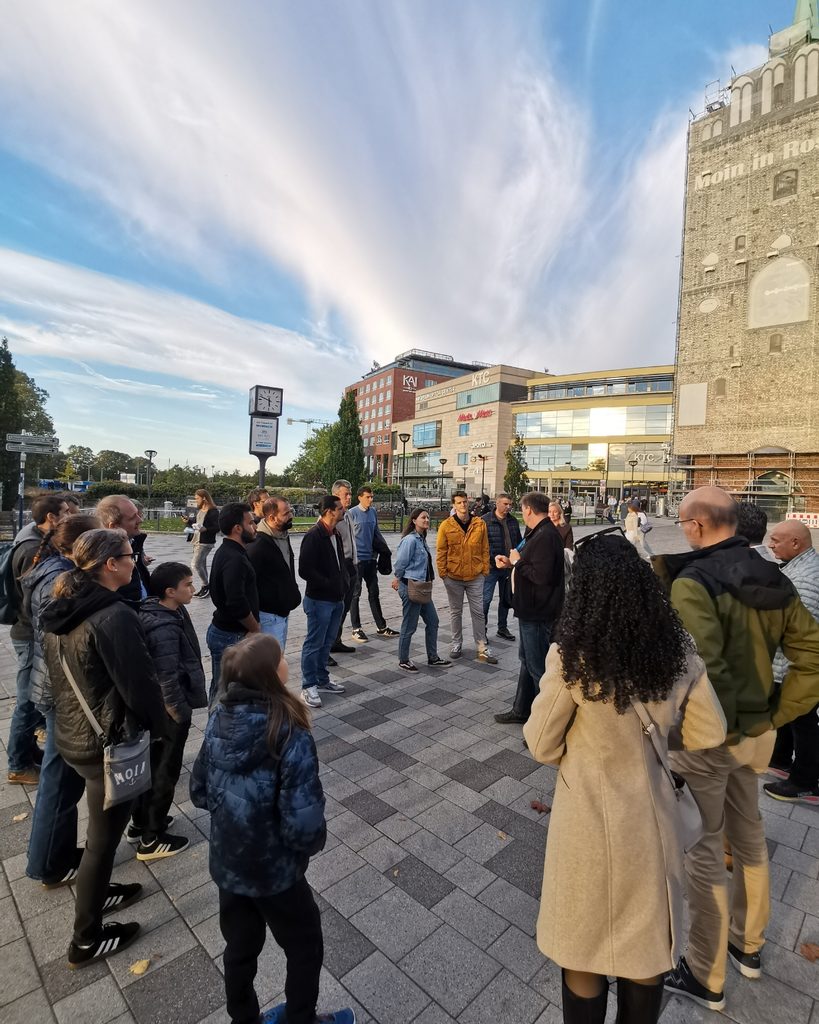
The WHEATWATCHER consortium came together in Rostock, Germany, in early October for its latest project meeting, bringing partners from across Europe together to review progress, exchange knowledge and coordinate the next stages of the project.

The main consortium sessions took place on 5 and 6 October 2026 at the University of Rostock. The programme concluded on 7 October with a field trip to the WHEATWATCHER pilot area in Demmin. 

Bringing the different parts of WHEATWATCHER together

The meeting provided an important opportunity for the consortium to look at WHEATWATCHER as a whole and connect the work taking place across its different Work Packages.

Discussions covered the project’s sensing technologies, field and laboratory activities, data collection and quality assurance, modelling and mapping, decision-support tools, demonstration activities, food traceability, project management, communication, dissemination and exploitation.

This cross-disciplinary approach is central to WHEATWATCHER, where information from soil, crops, sensors, laboratory analyses and digital tools is progressively brought together to support better understanding of soil and plant health and more informed agricultural decision-making.
Day 1: from communication and sensing to data and modelling

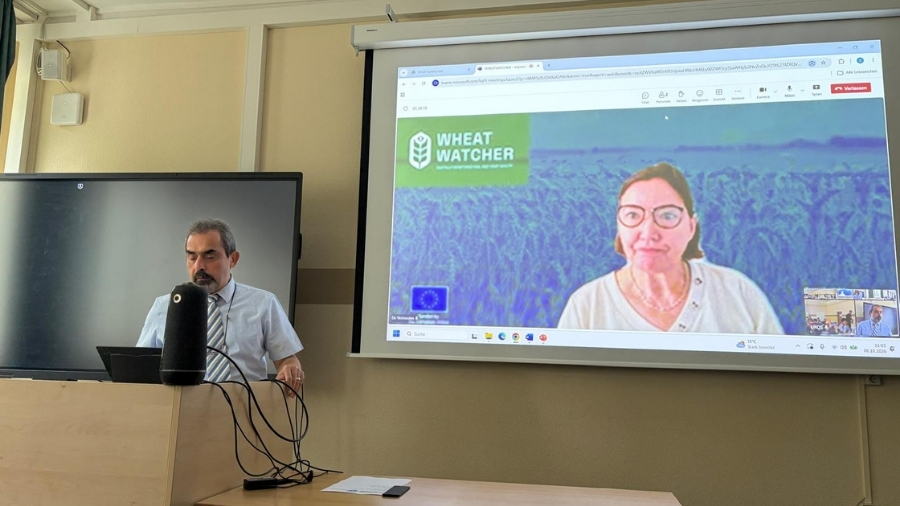
The first full meeting day opened with a keynote contribution from Dr Panos Panagos focusing on the European Soil Observatory, connecting WHEATWATCHER’s activities with the wider European soil monitoring and Mission Soil landscape.

The programme then moved into updates from several core areas of the project.

WP8 – Dissemination and Exploitation reviewed progress in communicating WHEATWATCHER’s scientific and technical work, strengthening the project’s visibility, engaging stakeholders and building connections with other European initiatives.

During the session, Zafeiro Vaxevanidou presented the progress of WP8 on behalf of ena Development Consultants, which leads the Work Package. Particular attention was also given to exploitation and impact: how the knowledge, technologies and results being developed across the project can reach the right audiences and create value beyond the lifetime of WHEATWATCHER.

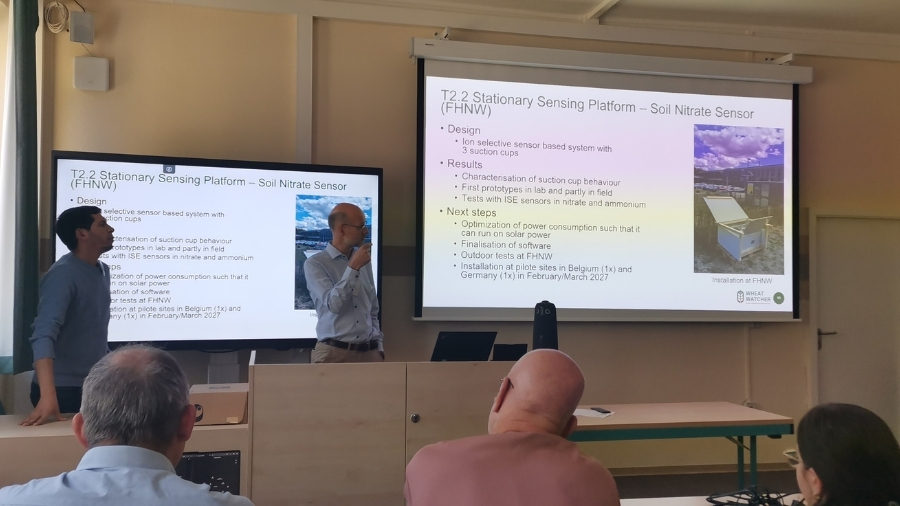
The technical sessions continued with WP2 on on-site sensor platform management, including updates on new extraction and analysis systems and stationary sensing technologies. WP3 focused on data capturing and quality assurance, including the new Tel Aviv University glasshouse experiment, soil sample analyses and microbiome-related work. 

WP4 then presented progress in modelling and mapping, with updates on the WHEATWATCHER portal, modelling activities using data from the German and Belgian pilot sites, locally weighted regression approaches and further modelling developments.

The day concluded with an open discussion, giving partners the opportunity to address challenges, exchange perspectives and align on the work ahead.
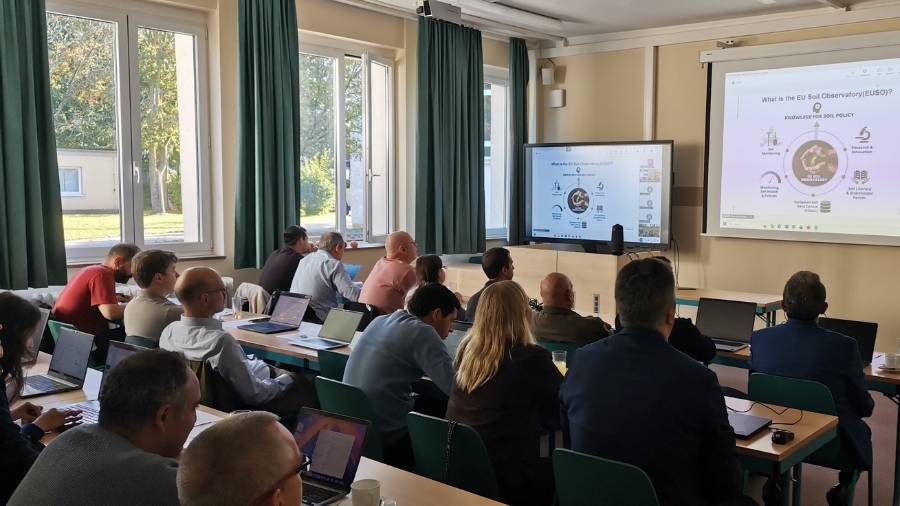
Day 2: management, decision support, demonstration and food traceability

The second meeting day began with two keynote presentations.

Prof. Ralf Uptmoor presented on winter wheat, while Dr Florine Degrune from CIRAD introduced the SOILWISE project, creating further connections with complementary European research activities. 

The consortium then reviewed WP1 – Project Management and General Assembly activities, including feedback from the first periodic reporting period and data management.

WP5 focused on the decision-support system for soil management, including updates to the WebGIS, Decision Support System and crop growth modelling. These tools form an important part of WHEATWATCHER’s effort to transform complex monitoring data into information that can support practical agricultural decisions. 

The programme continued with WP6 on demonstration activities and WP7 on food traceability, where partners reviewed ongoing work and first results related to the traceability component of the project. 
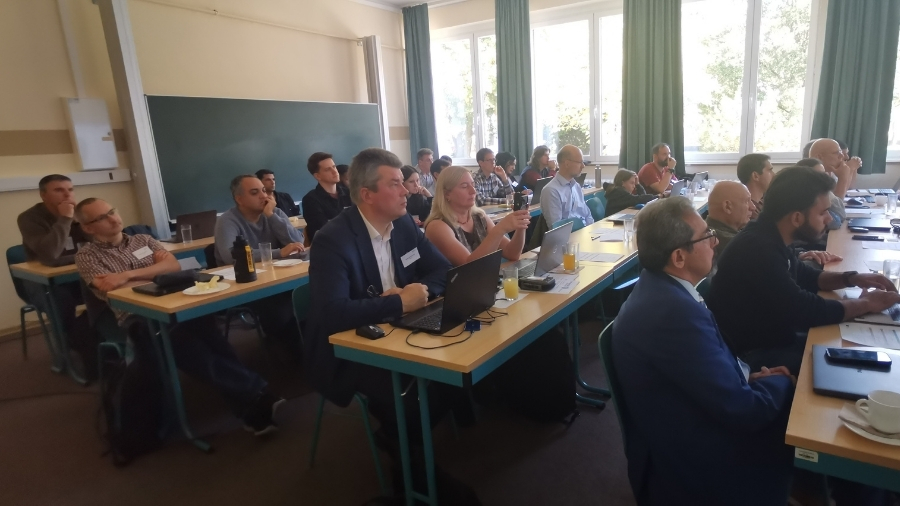
From the meeting room to the field

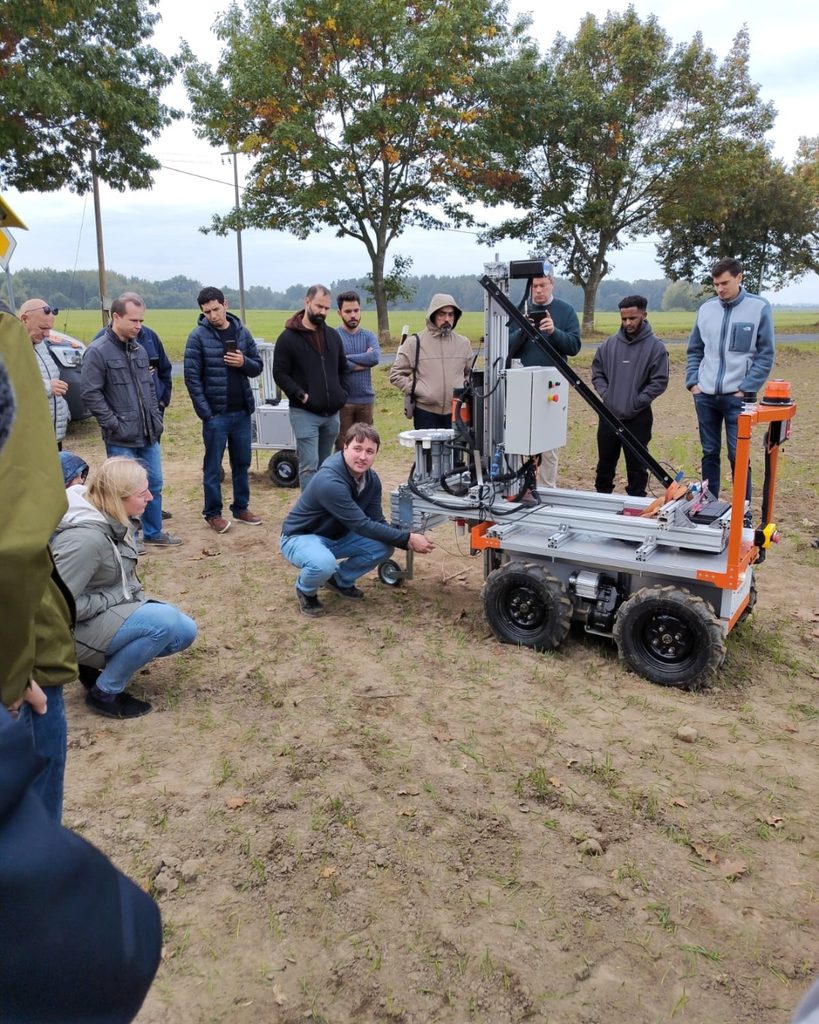
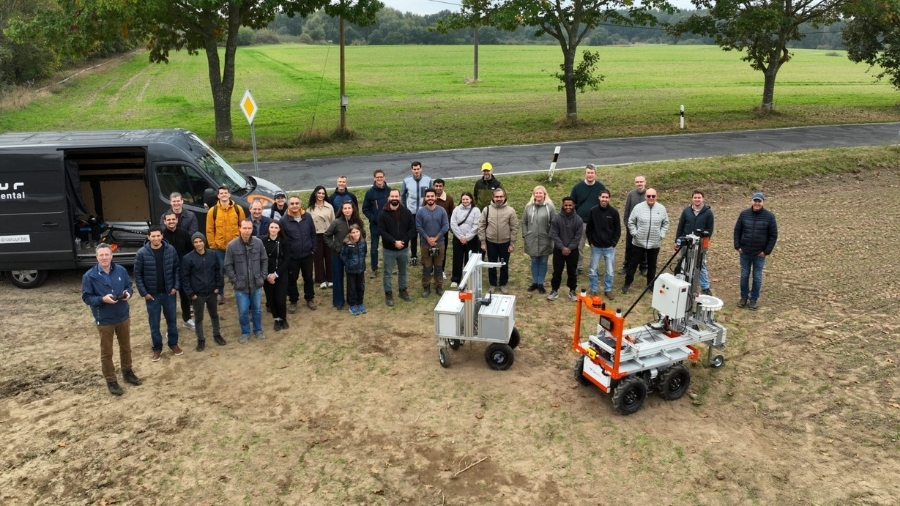
The consortium meeting concluded with a field trip to the Demmin Pilot Farm on 7 October.

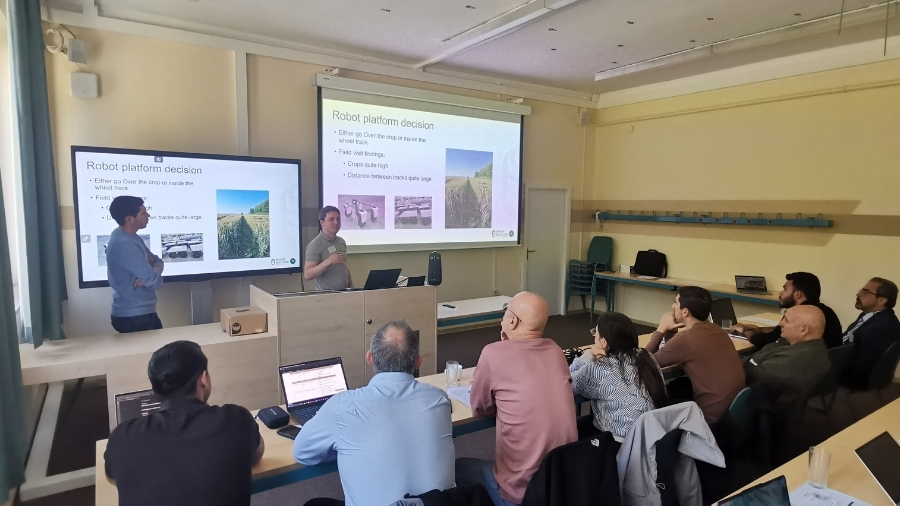
Participants visited three sites of interest as well as the farm itself, gaining a closer view of daily agricultural operations and the technologies being used in the field. The programme also included demonstrations of two robotics platforms developed by UGent and Exobotics.

The field visit provided an important bridge between the technical discussions held during the meeting and the real-world conditions in which WHEATWATCHER technologies, sensing approaches and monitoring strategies are being tested.
Moving WHEATWATCHER forward together

Consortium meetings are an important part of a multidisciplinary project such as WHEATWATCHER.

They create the space to connect scientific results with technical development, compare progress across Work Packages, identify challenges and ensure that the different components of the project continue moving towards common objectives.

The Rostock meeting once again highlighted the value of collaboration across disciplines and organisations — from soil science, sensing and robotics to modelling, decision support, traceability, communication and exploitation.

With new data, experiments, tools and field activities continuing across Europe, the consortium now moves into the next phase of work with a shared focus on turning WHEATWATCHER’s research into practical knowledge and solutions for healthier soils, more resilient crops and more sustainable wheat production.
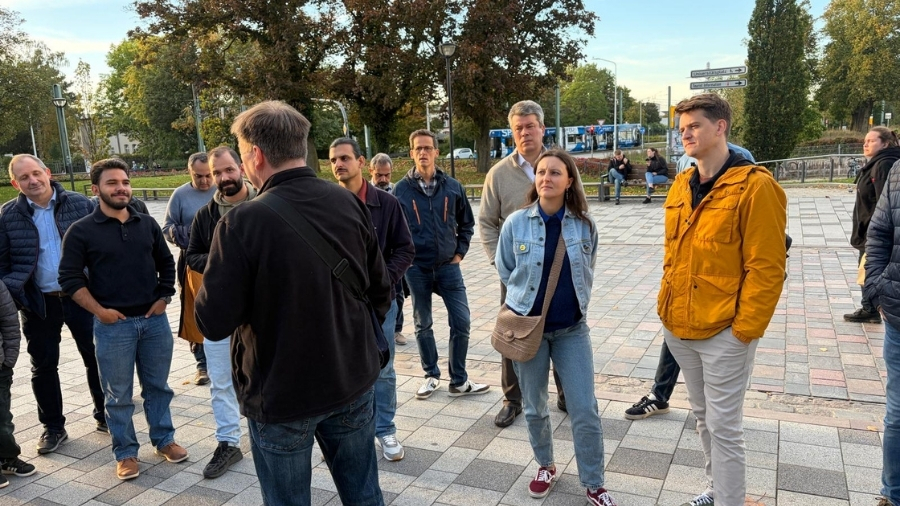
WHEATWATCHER Reaches Its Third Technical Milestone

WHEATWATCHER reaches Its 3rd milestone

WHEATWATCHER has successfully reached its third technical milestone:

Milestone 3 (MS3): Finalisation of the glasshouse case study

Led by Tel Aviv University within Work Package 3, the glasshouse case study has been completed, providing an important controlled environment for investigating how different soil and crop stressors affect wheat health and development.

This milestone represents a key step in the project’s work to connect controlled experimental data with field-based monitoring, sensor validation and predictive modelling.

The glasshouse case study was designed to examine how nutrients, chemical contaminants and biological stressors can influence soil conditions and wheat performance.

By working in a controlled environment, the research team was able to monitor soil and plant responses under carefully defined conditions. This approach allows researchers to better understand cause-and-effect relationships between soil properties, stress factors and crop development.

The knowledge generated through this work will support WHEATWATCHER’s wider objective of improving soil and crop health monitoring through advanced sensing technologies and data-driven approaches.

Key achievements of Milestone 3

The finalisation of the glasshouse case study includes several important achievements:

  • Controlled testing of soil and crop responses to different stressors
  • Collection of high-quality soil and plant data under monitored conditions
  • Generation of reference datasets to support sensor development and calibration
  • Improved understanding of the links between soil conditions and crop performance
  • Preparation of scientific evidence to support field validation activities across the project’s pilot sites

These results provide a valuable foundation for the next stages of WHEATWATCHER, where controlled experimental findings will be connected with real-world field data.

Supporting sensor validation and predictive models

The completion of MS3 provides critical evidence for the validation of WHEATWATCHER’s sensing technologies and predictive models.

Reference datasets generated under controlled conditions can help researchers compare sensor outputs with known soil and plant responses. This supports the development of more accurate monitoring approaches for soil health assessment, early stress detection and crop management.

The glasshouse case study also contributes to the project’s ambition to transform raw measurements into practical insights that can support decision-making in agriculture.

Building on previous technical milestones

The first technical milestone focused on the development of WHEATWATCHER’s sensing platforms.

The second milestone advanced the integration of the data acquisition system, connecting data from different sensing technologies into a common framework.

The third milestone now adds another essential layer: controlled experimental evidence that helps explain how soil and crop systems respond to nutrients, contaminants and biological stressors.

Together, these milestones show the project’s step-by-step progress from technology development, to data integration, to scientific validation.

WHEATWATCHER second technical milestone

WHEATWATCHER Reaches Its Second Technical Milestone

Following the successful development of its stationary, proximal and remote sensing platforms, WHEATWATCHER has reached its second technical milestone:

Milestone 2 (MS2): Integration of the data acquisition system

This achievement marks an important transition for the project. While the first technical milestone focused on developing the individual sensing technologies, MS2 brings these different systems together within a common framework for collecting, managing and processing data.

Led by Hahn-Schickard, with contributions from the teams involved in the project’s sensor-platform activities, this integration creates the technological foundation needed to transform measurements from different sources into consistent and usable information.

From individual sensing platforms to an integrated system

WHEATWATCHER combines several complementary monitoring approaches to capture soil, crop and environmental conditions at different spatial and temporal scales.

These include stationary sensing systems that continuously collect information directly from the field, mobile proximal platforms that map variability across soil and crops, and remote sensing technologies that provide a wider view through satellite and aerial observations.

Each platform produces different types of data. For these measurements to contribute to a complete understanding of field conditions, they must be collected, structured and managed in a coordinated way.

The completion of MS2 establishes this connection between the project’s sensing technologies.

Key achievements of Milestone 2

The integration of the data acquisition system includes:

  • Integration of stationary, proximal and remote sensing platforms
  • Harmonisation of data streams generated by different sensors
  • Coordination of data collected across the WHEATWATCHER pilot sites
  • Establishment of a common framework for data collection and storage
  • Preparation of the system for large-scale field validation
  • Creation of the technical basis for advanced analytics and decision-support applications

This common framework will help ensure that data from different platforms and locations can be organised, compared and processed more effectively.

Why data integration matters

Advanced sensors can generate large volumes of information about soil properties, crop development, environmental conditions and potential stressors. However, the value of these measurements depends on the project’s ability to connect and interpret them.

An integrated data acquisition system makes it possible to bring together measurements collected at different scales and through different technologies.

For example, continuous observations from stationary sensors can be combined with mobile field measurements and broader remote sensing data. This integrated approach can provide a more complete picture of soil and crop conditions than any individual technology could deliver on its own.

By harmonising these data streams, WHEATWATCHER is preparing the ground for reliable analysis, automated mapping and the development of practical recommendations for end users.

Turning diverse measurements into actionable insights

The completion of MS2 represents a key step towards transforming environmental and agricultural data into information that can support real-world decisions.

The integrated system will contribute to WHEATWATCHER’s work in areas such as:

  • Soil health monitoring
  • Detection of nutrient imbalances and environmental stressors
  • Assessment of crop health and development
  • Site-specific soil and crop management
  • More efficient use of agricultural inputs
  • Support for food safety and traceability
  • Data-driven decision-making in wheat production

Connecting multiple sensing technologies within one data ecosystem also supports the project’s wider objective of developing scalable and interoperable monitoring solutions.

Building on the first technical milestone

WHEATWATCHER’s first technical milestone marked the successful development of its complementary sensing platforms.

The second milestone builds directly on that achievement by connecting these technologies through a shared data acquisition framework.

This progression reflects the project’s integrated approach: first developing the tools required to observe soil and crop conditions, and then ensuring that the information they produce can work together.

The result is a stronger foundation for moving from data collection to meaningful analysis and practical agricultural applications.

Next steps

With the data acquisition system now integrated, WHEATWATCHER is moving towards the next stages of development and validation.

Upcoming activities will include:

  • Testing and validating the integrated system under real field conditions
  • Assessing the quality and consistency of data from different platforms
  • Applying advanced data analytics and machine learning methods
  • Integrating predictive models and automated mapping tools
  • Connecting the processed information with the project’s Decision Support System

These steps will help translate the project’s growing datasets into accessible and actionable insights for farmers, researchers and other stakeholders.

By reaching its second technical milestone, WHEATWATCHER moves closer to its goal of creating a comprehensive digital monitoring system that supports healthier soils, more resilient crops and smarter, more sustainable wheat production.
Skip to content