WHEATWATCHER at the Soils for Europe Conference 2026
WHEATWATCHER was strongly represented at the Soils for Europe Conference 2026, held at the University of Coimbra, Portugal, from 7 to 11 September 2026.
The conference brought together the European soil community to exchange knowledge, present new research and discuss how science and innovation can contribute to healthier soils and support the objectives of the EU Mission “A Soil Deal for Europe”.
WHEATWATCHER partners from GFZ Helmholtz Centre for Geosciences, Tel Aviv University, IUNG and the Czech University of Life Sciences Prague contributed to the project’s presence at the conference, highlighting different aspects of its work on soil monitoring, spectral sensing, artificial intelligence and controlled glasshouse research.
Bringing WHEATWATCHER into the European soil discussion
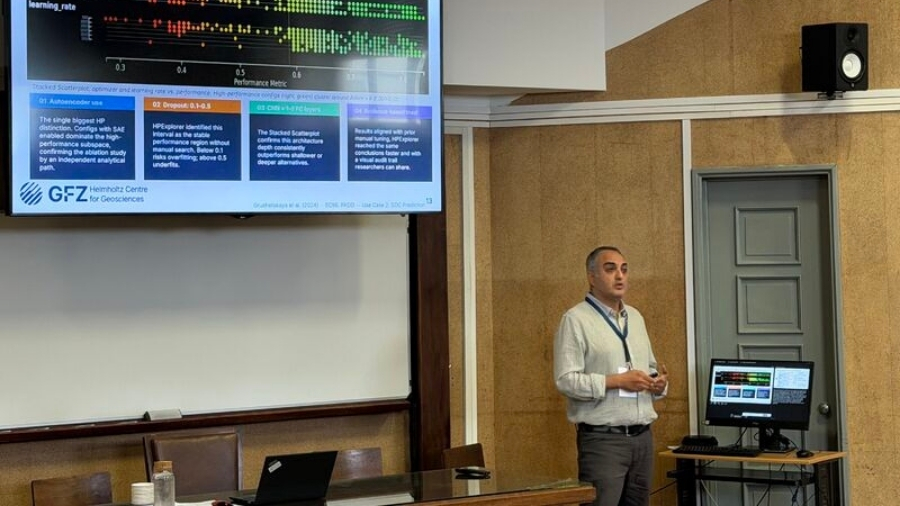
Dr. Mehdi Saberioon from GFZ Helmholtz Centre for Geosciences represented WHEATWATCHER during the EUSO Forum session “Five Years On: Key Insights from the Mission Soil Program”.
His contribution focused on how open spectral libraries and explainable artificial intelligence can support faster, more affordable and more transparent approaches to soil monitoring.
These technologies connect closely with WHEATWATCHER’s wider approach, which combines sensing technologies, spectral information, field and laboratory data, modelling and digital tools to better understand soil and crop conditions.
His participation and presentation are explored in more detail in our dedicated article.
Understanding pollution signals through the soil, plant and grain continuum
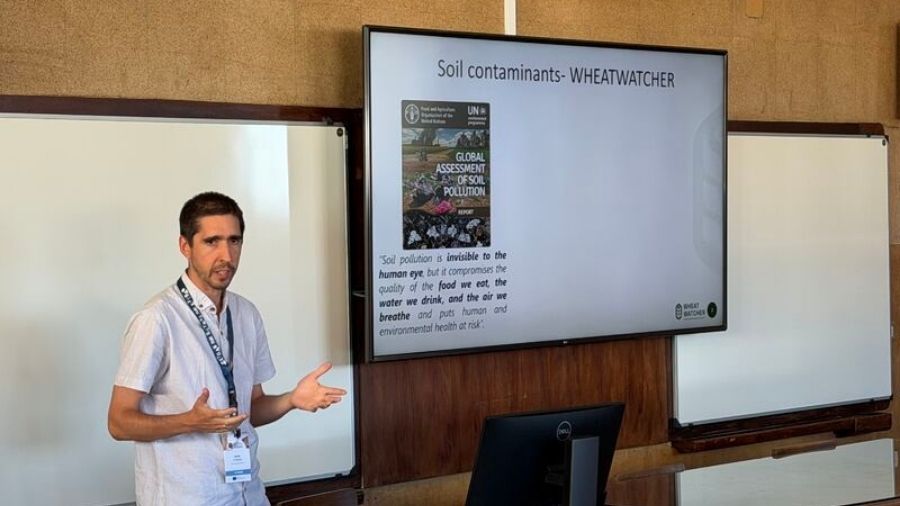
Simon Futerman from Tel Aviv University also presented research carried out within WHEATWATCHER.
His presentation focused on controlled glasshouse experiments in which wheat was grown under four contaminants at three different concentration levels.
Throughout the experiments, proximal sensing of soil, vegetation and grain was conducted alongside microbiome sampling.
By observing how the soil, plants and associated microbial communities respond to different stress conditions, the research aims to explore whether contamination can be identified earlier through measurable biological and spectral signals.
This reflects an important part of the WHEATWATCHER approach, understanding what happens across the soil, plant and grain continuum rather than looking at each component separately.
Improving soil spectral measurements in the field
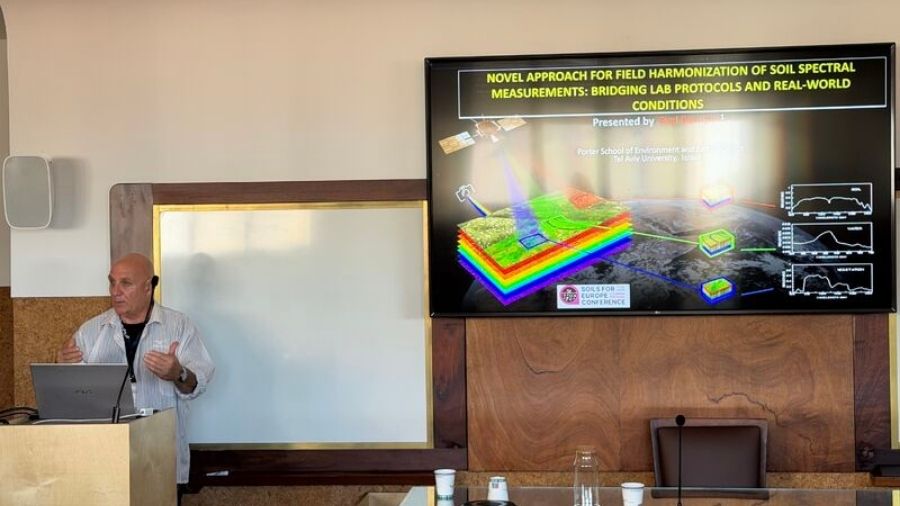
Prof. Eyal Ben-Dor from Tel Aviv University presented SoilPRO®, a device designed to improve the consistency of soil spectral measurements carried out directly in the field.
Soil spectroscopy can provide valuable information about soil properties, but measurements collected outside the laboratory can be affected by changing light conditions, measurement geometry and differences between operators or instruments.
SoilPRO® recreates controlled measurement conditions in the field, helping spectral measurements become more comparable with laboratory standards and more consistent across users, locations and instruments.
This is particularly relevant for digital soil monitoring, where reliable and comparable measurements are essential for developing robust datasets, predictive models and decision support tools.
A strong partner presence from across the consortium
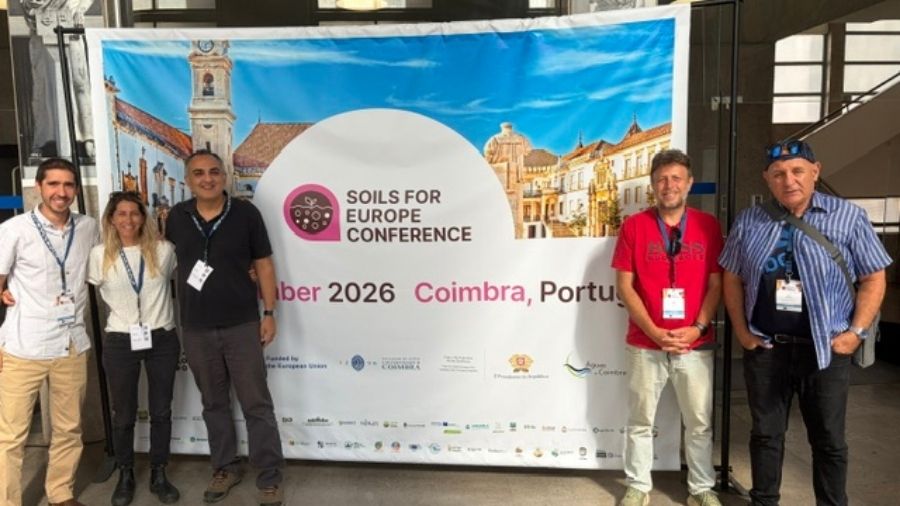
In addition to the presentations delivered at the conference, WHEATWATCHER was also represented by several consortium partners who contributed to the project’s visibility and presence during the event.
Among them were Prof. Grzegorz Siebielec, Head of the Soil Science and Environmental Analyses Department at IUNG, João Augusto Coblinski from IUNG, and Dr. Vahid Kosravi from the Czech University of Life Sciences Prague.
Their presence reflected the collaborative and multidisciplinary nature of the WHEATWATCHER consortium, bringing together expertise from soil science, environmental analysis, crop monitoring, sensing technologies and data driven approaches.
Together with the other participating partners, they helped showcase the project’s active role within the wider Mission Soil community and reinforced WHEATWATCHER’s contribution to European dialogue on soil health and sustainable agriculture.
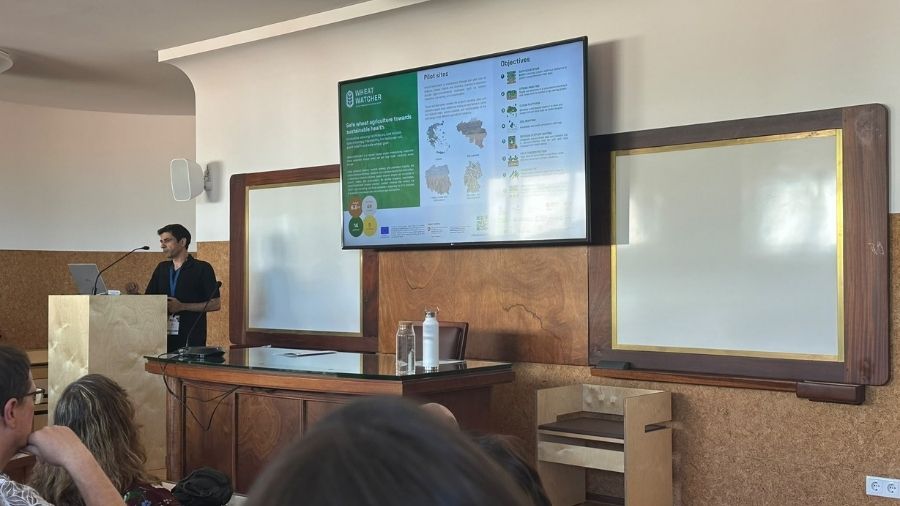
Connecting different layers of soil and crop monitoring
The contributions of WHEATWATCHER partners at the Soils for Europe Conference highlighted several complementary dimensions of the project.
From explainable AI and open spectral libraries, to controlled experiments examining contaminant stress, microbiome responses and improved field spectroscopy, each activity contributes to the same broader objective, generating reliable information about soil and crop health.
WHEATWATCHER is developing an integrated monitoring approach in which different technologies and datasets can work together to improve understanding of field variability, identify potential stressors and support better informed agricultural decisions.
WHEATWATCHER within the Mission Soil community
The Soils for Europe Conference created an important meeting point for researchers, practitioners, policymakers and EU funded projects working towards healthier soils.
WHEATWATCHER’s participation demonstrated how the project contributes to this wider European effort through research that connects soil science, crop monitoring, sensing technologies and digital innovation.
The presence of Dr. Mehdi Saberioon from GFZ Helmholtz Centre for Geosciences, Simon Futerman and Prof. Eyal Ben-Dor from Tel Aviv University, Prof. Grzegorz Siebielec and João Augusto Coblinski from IUNG, and Dr. Vahid Kosravi from the Czech University of Life Sciences Prague, provided an opportunity to share WHEATWATCHER’s work with the wider soil community and exchange knowledge with other initiatives working under Mission Soil.
Through these collaborations and scientific exchanges, WHEATWATCHER continues to strengthen the connection between research, technology and practical approaches for healthier soils and more sustainable wheat production.