Tag: GFZ

WHEATWATCHER stationary sensor installations

Robotic-Based Sensing and Sampling

The WHEATWATCHER project continues to advance its field monitoring activities with new stationary sensor installations in Germany and Lithuania, strengthening the collection and accessibility of environmental and soil data across Europe.

Following the recent WHEATWATCHER Consortium Meeting in Rostock, project partners carried out further sensor deployment activities, while a remotely coordinated installation in Lithuania marked another step in supporting the implementation of monitoring technologies across different locations.

Led by the expertise of the University of Applied Sciences and Arts Northwestern Switzerland (FHNW), these activities contribute to WHEATWATCHER’s objective of combining continuous field measurements with accessible digital data infrastructure.
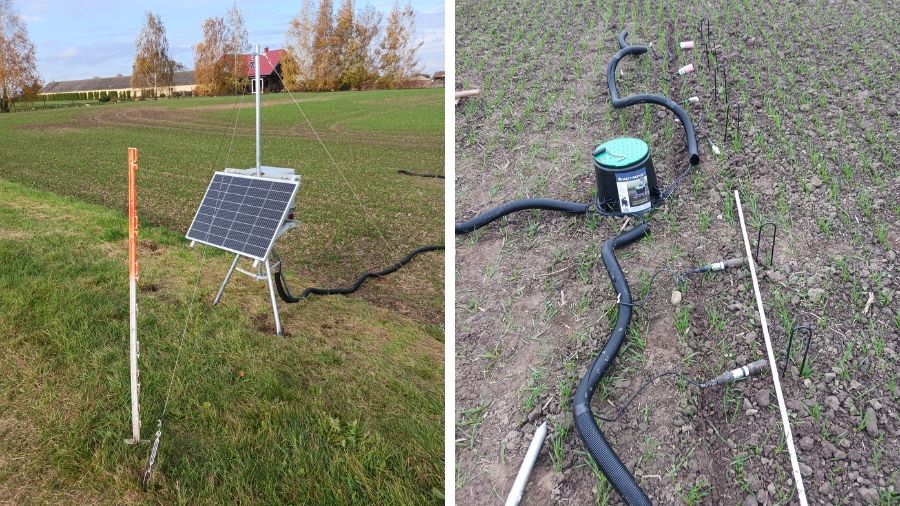
Installing stationary sensors in Germany

Following the WHEATWATCHER consortium meeting and field trip to the Demmin pilot area on 7 October 2026, Fabricio Parrillo (FHNW), Thomas Piernicke and Mehdi Saberioon (GFZ) carried out the installation of stationary sensor systems in Germany.

The activity built on the consortium’s discussions in Rostock, where partners reviewed progress in sensing technologies, field measurements, data integration and the development of digital monitoring tools.

Stationary sensor systems play an important role in the project’s monitoring approach. Unlike mobile sensing platforms, which collect measurements during specific field operations, stationary systems are designed to continuously monitor environmental and soil conditions over time.

Within WHEATWATCHER, these technologies support the measurement of parameters such as soil moisture, temperature and electrical conductivity, alongside atmospheric conditions.

Continuous observations help researchers examine how soil and environmental conditions change over time, providing valuable information for interpreting field measurements and supporting further analysis.

A remotely coordinated installation in Lithuania

The project’s sensor deployment activities also progressed in Lithuania.

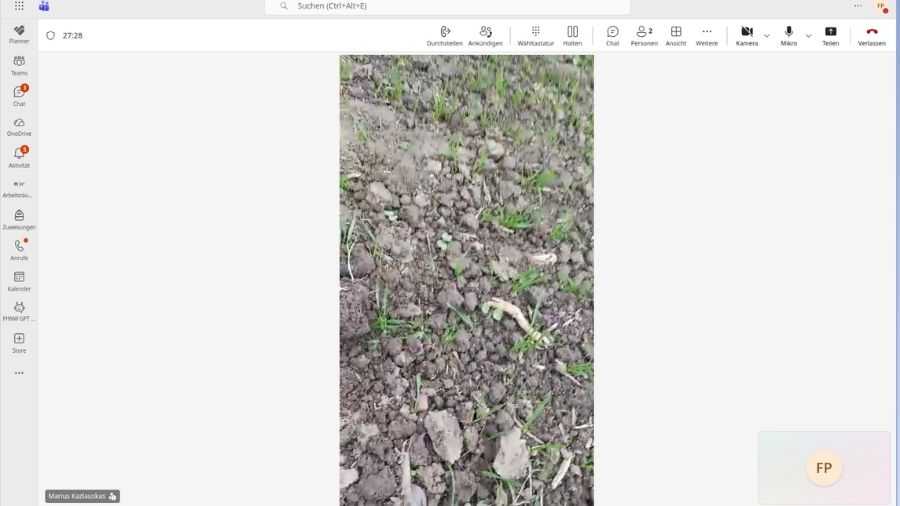
On 20 October 2026, Marius conducted the first remotely coordinated station installation through Microsoft Teams.

This activity demonstrated an alternative approach to installing monitoring equipment, allowing technical coordination and support to take place remotely rather than requiring all specialists to be physically present at the installation site.

Remotely supported installations can provide practical advantages for research projects operating across multiple European locations, particularly when coordinating technical expertise between partners.

The experience also contributes to WHEATWATCHER’s broader effort to develop monitoring solutions that can be implemented and supported in different field environments.
Connecting field measurements through the WHEATWATCHER Portal

An important aspect of these installations is not only the collection of measurements, but also how the resulting data can be accessed and used.

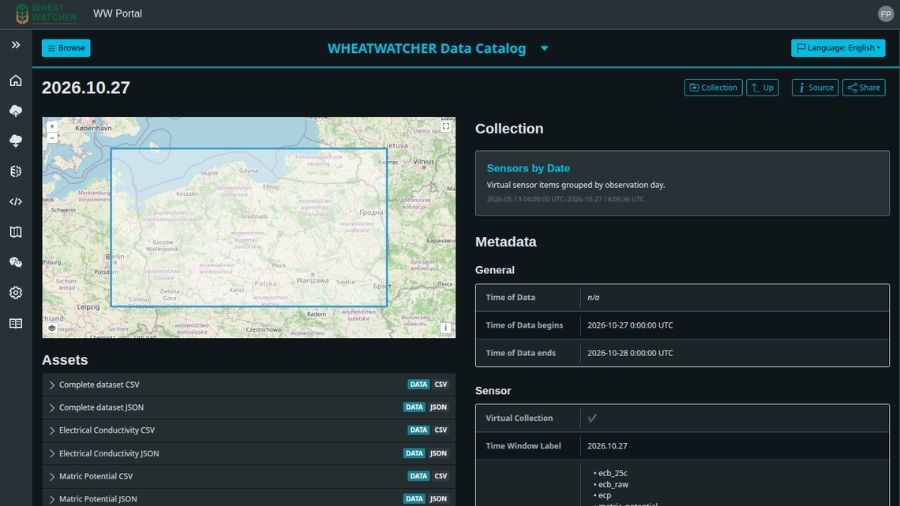
According to the FHNW team, data from the monitoring systems are made available through the WHEATWATCHER Portal, providing project partners with access to information collected through the project’s monitoring infrastructure.

The platform supports researchers and modellers in exploring available datasets and incorporating relevant measurements into their scientific work.

A key component of this approach is the use of SpatioTemporal Asset Catalogs (STAC), a standard for organising and describing data associated with specific locations and times.

Through the STAC Browser, project partners can explore available datasets, while the STAC API enables programmatic access for integration into modelling and data processing workflows.

This approach helps make monitoring information easier to discover and use across different research activities.

By connecting field measurements with digital data management tools, WHEATWATCHER supports the transition from individual sensor observations towards a more integrated approach to agricultural monitoring.
From continuous monitoring to better agricultural knowledge

The stationary sensor installations are part of WHEATWATCHER’s wider strategy to combine different sources of information, including field measurements, laboratory analyses, proximal sensing and remote sensing data.

Through this integrated approach, the project aims to improve understanding of soil properties, environmental conditions and factors influencing wheat development.

The information gathered from stationary sensors can contribute to modelling and mapping activities and support the continued development of WHEATWATCHER’s digital Decision Support System (DSS).

By making data available to researchers and project partners through a shared infrastructure, the project is working towards more consistent and informed assessments of agricultural conditions.

WHEATWATCHER at the Soils for Europe Conference 2026

WHEATWATCHER was strongly represented at the Soils for Europe Conference 2026, held at the University of Coimbra, Portugal, from 7 to 11 September 2026.

The conference brought together the European soil community to exchange knowledge, present new research and discuss how science and innovation can contribute to healthier soils and support the objectives of the EU Mission “A Soil Deal for Europe”.

WHEATWATCHER partners from GFZ Helmholtz Centre for Geosciences, Tel Aviv University, IUNG and the Czech University of Life Sciences Prague contributed to the project’s presence at the conference, highlighting different aspects of its work on soil monitoring, spectral sensing, artificial intelligence and controlled glasshouse research.

Bringing WHEATWATCHER into the European soil discussion

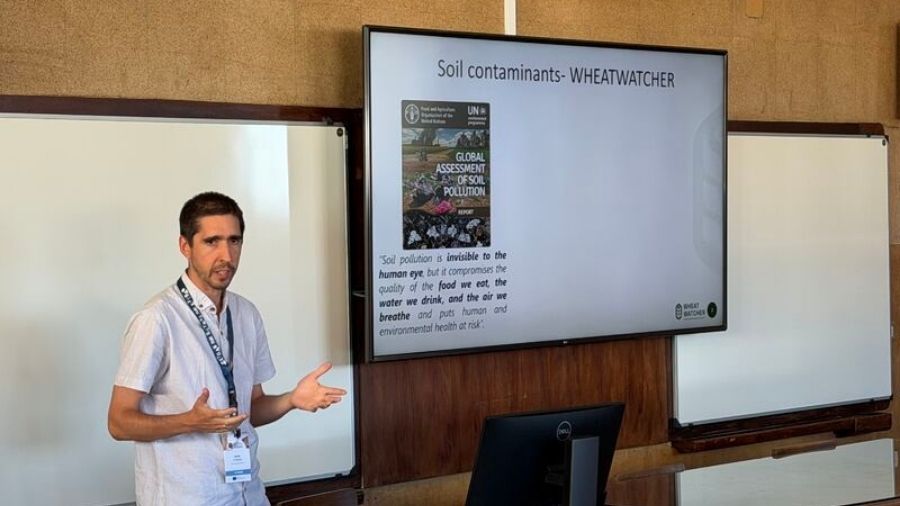
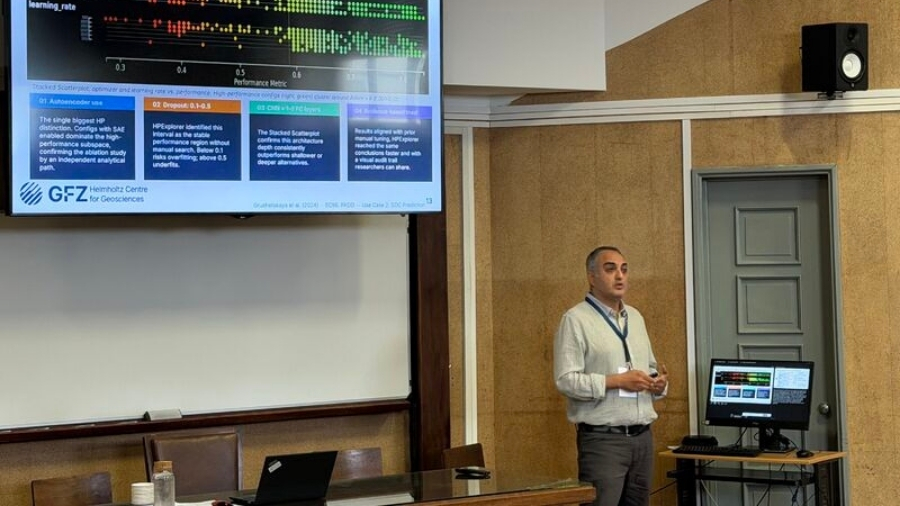
Dr. Mehdi Saberioon from GFZ Helmholtz Centre for Geosciences represented WHEATWATCHER during the EUSO Forum session “Five Years On: Key Insights from the Mission Soil Program”.

His contribution focused on how open spectral libraries and explainable artificial intelligence can support faster, more affordable and more transparent approaches to soil monitoring.

These technologies connect closely with WHEATWATCHER’s wider approach, which combines sensing technologies, spectral information, field and laboratory data, modelling and digital tools to better understand soil and crop conditions.

His participation and presentation are explored in more detail in our dedicated article.

mehdi soils 4 eu

Understanding pollution signals through the soil, plant and grain continuum

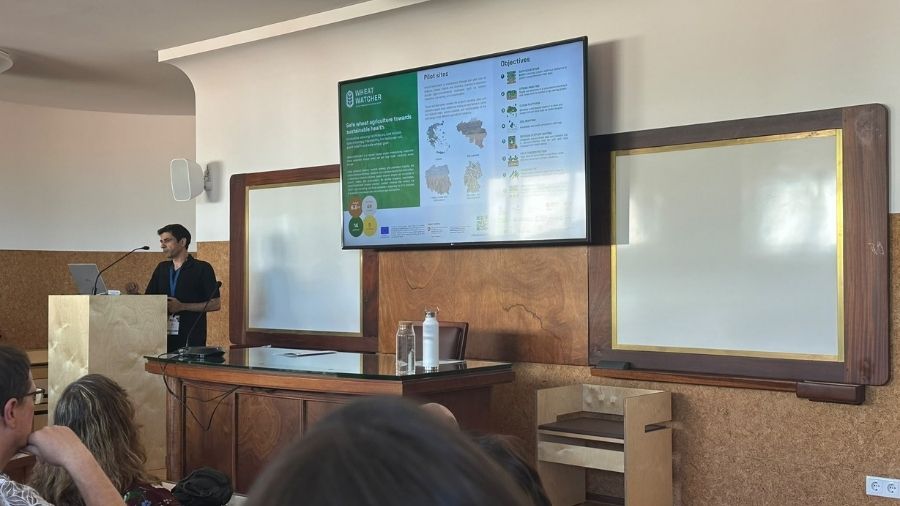
Simon Futerman from Tel Aviv University also presented research carried out within WHEATWATCHER.

His presentation focused on controlled glasshouse experiments in which wheat was grown under four contaminants at three different concentration levels.

Throughout the experiments, proximal sensing of soil, vegetation and grain was conducted alongside microbiome sampling.

By observing how the soil, plants and associated microbial communities respond to different stress conditions, the research aims to explore whether contamination can be identified earlier through measurable biological and spectral signals.

This reflects an important part of the WHEATWATCHER approach, understanding what happens across the soil, plant and grain continuum rather than looking at each component separately.

Improving soil spectral measurements in the field

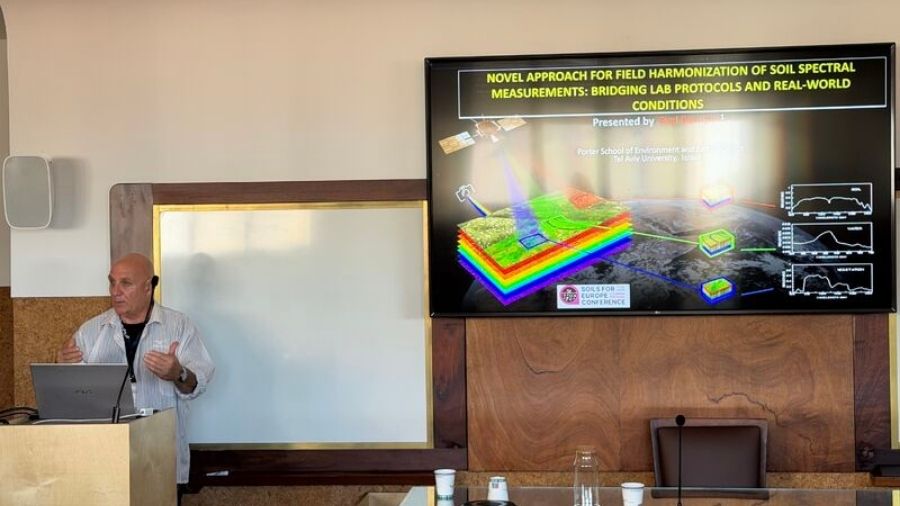
Prof. Eyal Ben-Dor from Tel Aviv University presented SoilPRO®, a device designed to improve the consistency of soil spectral measurements carried out directly in the field.

Soil spectroscopy can provide valuable information about soil properties, but measurements collected outside the laboratory can be affected by changing light conditions, measurement geometry and differences between operators or instruments.

SoilPRO® recreates controlled measurement conditions in the field, helping spectral measurements become more comparable with laboratory standards and more consistent across users, locations and instruments.

This is particularly relevant for digital soil monitoring, where reliable and comparable measurements are essential for developing robust datasets, predictive models and decision support tools.

A strong partner presence from across the consortium

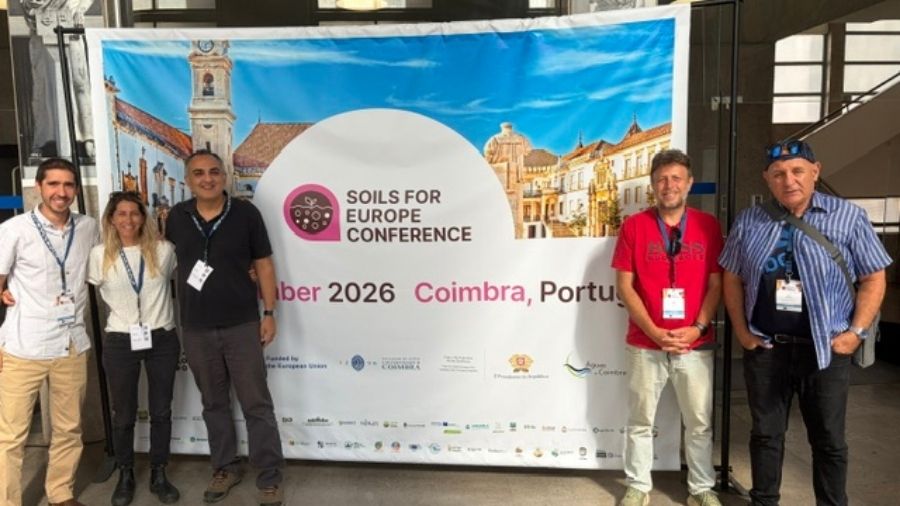
In addition to the presentations delivered at the conference, WHEATWATCHER was also represented by several consortium partners who contributed to the project’s visibility and presence during the event.

Among them were Prof. Grzegorz Siebielec, Head of the Soil Science and Environmental Analyses Department at IUNG, João Augusto Coblinski from IUNG, and Dr. Vahid Kosravi from the Czech University of Life Sciences Prague.

Their presence reflected the collaborative and multidisciplinary nature of the WHEATWATCHER consortium, bringing together expertise from soil science, environmental analysis, crop monitoring, sensing technologies and data driven approaches.

Together with the other participating partners, they helped showcase the project’s active role within the wider Mission Soil community and reinforced WHEATWATCHER’s contribution to European dialogue on soil health and sustainable agriculture.

Connecting different layers of soil and crop monitoring

The contributions of WHEATWATCHER partners at the Soils for Europe Conference highlighted several complementary dimensions of the project.

From explainable AI and open spectral libraries, to controlled experiments examining contaminant stress, microbiome responses and improved field spectroscopy, each activity contributes to the same broader objective, generating reliable information about soil and crop health.

WHEATWATCHER is developing an integrated monitoring approach in which different technologies and datasets can work together to improve understanding of field variability, identify potential stressors and support better informed agricultural decisions.

WHEATWATCHER within the Mission Soil community

The Soils for Europe Conference created an important meeting point for researchers, practitioners, policymakers and EU funded projects working towards healthier soils.

WHEATWATCHER’s participation demonstrated how the project contributes to this wider European effort through research that connects soil science, crop monitoring, sensing technologies and digital innovation.

The presence of Dr. Mehdi Saberioon from GFZ Helmholtz Centre for Geosciences, Simon Futerman and Prof. Eyal Ben-Dor from Tel Aviv University, Prof. Grzegorz Siebielec and João Augusto Coblinski from IUNG, and Dr. Vahid Kosravi from the Czech University of Life Sciences Prague, provided an opportunity to share WHEATWATCHER’s work with the wider soil community and exchange knowledge with other initiatives working under Mission Soil.

Through these collaborations and scientific exchanges, WHEATWATCHER continues to strengthen the connection between research, technology and practical approaches for healthier soils and more sustainable wheat production.

mehdi soils 4 eu

Dr. Mehdi Saberioon Presents WHEATWATCHER at the Soils for Europe Conference 2026

WHEATWATCHER was presented at the Soils for Europe Conference 2026, held in Coimbra, Portugal, from 7 to 11 September 2026.

The project was represented by Dr. Mehdi Saberioon from GFZ Helmholtz Centre for Geosciences, partner of the WHEATWATCHER project, who contributed to the discussions on soil monitoring, spectral data and explainable artificial intelligence.

The Soils for Europe Conference brings together researchers, policymakers, land managers, practitioners, civil society and industry representatives to showcase the latest research and innovation developed across Europe under the EU Mission “A Soil Deal for Europe”.

WHEATWATCHER in the Mission Soil discussion

Dr. Mehdi Saberioon participated in the EUSO Forum session “Five Years On: Key Insights from the Mission Soil Program”, organised as part of the EU Soil Observatory Stakeholders Forum 2026.

The session brought together Mission Soil projects and experts to share key findings from the programme and discuss how research outputs can contribute to European soil policies.

During the session, Dr. Saberioon presented how open spectral libraries and explainable AI can make soil monitoring faster, cheaper and more transparent for decision-makers.

This topic is closely connected to WHEATWATCHER’s work, which combines sensing technologies, soil and crop data, spectral analysis and digital tools to support more reliable soil and crop health monitoring.

Open spectral libraries for better soil monitoring

Spectral libraries are important resources for soil research because they connect spectral measurements with soil properties and conditions.

By using open spectral libraries, researchers can improve access to comparable soil information and support the development of more transparent monitoring methods. These resources can help transform complex soil data into practical insights that support research, policy and agricultural decision-making.

Within WHEATWATCHER, spectral data are part of a wider monitoring approach that links field measurements, laboratory analysis, remote sensing and modelling. This supports the project’s ambition to better understand soil conditions and crop responses across different pilot sites.

Explainable AI for transparent decision-making

Artificial intelligence can help process large and complex datasets, but transparency is essential when AI-based outputs are used to support environmental and agricultural decisions.

Explainable AI aims to make model outputs easier to understand, helping users see how data are interpreted and why a specific result or recommendation is generated.

For soil monitoring, this can be especially important. Decision-makers, farmers, researchers and advisors need reliable information that is not only accurate, but also understandable and trustworthy.

By connecting explainable AI with soil spectral data, WHEATWATCHER contributes to a more transparent approach to digital soil monitoring.

Connecting research with European soil policy

The Soils for Europe Conference provided an important space for Mission Soil projects to exchange knowledge and demonstrate how research can support the future of soil health in Europe.

The EUSO Forum session, organised by Dr. Panos Panagos, Scientific/Research Officer and Project Leader of the EU Soil Observatory, highlighted the role of Mission Soil projects in generating knowledge, tools and data that can inform European soil policies.

Alongside WHEATWATCHER, several projects and research teams presented work on soil health assessment, soil pollution, Living Labs, soil biodiversity, microplastics, microbial functioning, pesticide residues and land degradation.

This wider context shows the importance of connecting different scientific approaches to build a more complete understanding of soil health across Europe.

Skip to content