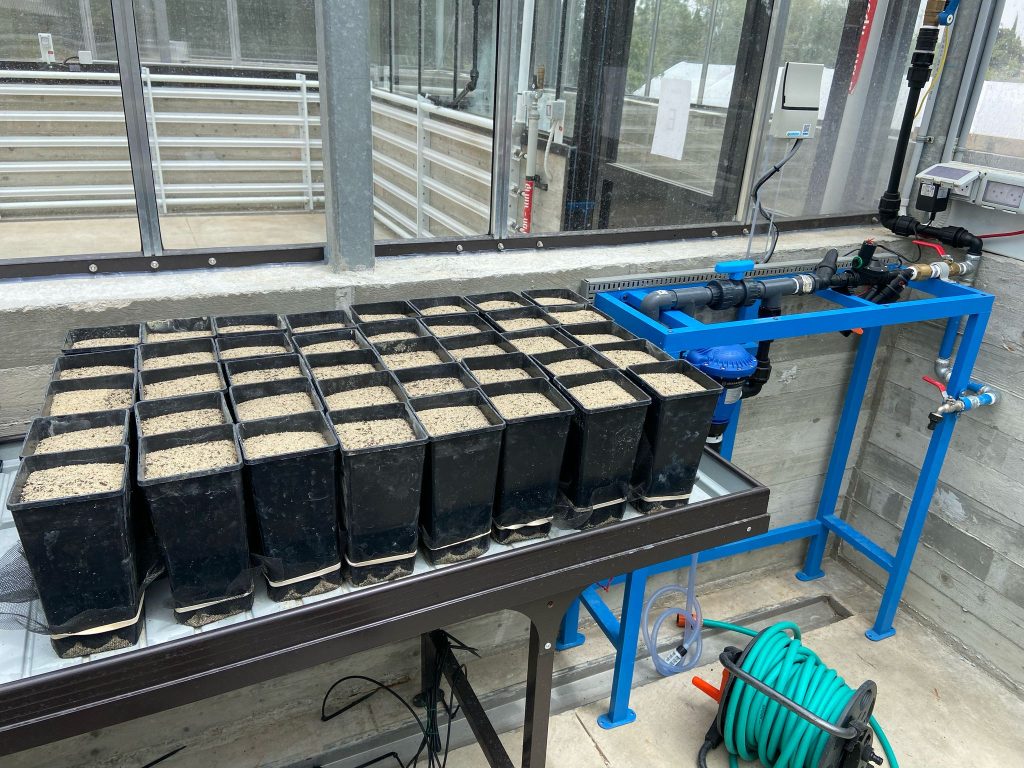
Tracking wheat growth under stress: Inside WHEATWATCHER’s glasshouse study
In the heart of Tel Aviv University’s research glasshouse, a key experiment is unfolding as part of Task 3.1 of the WHEATWATCHER project. This controlled case study is designed to monitor wheat growth over multiple growing seasons under carefully defined conditions — focusing specifically on the effects of soil contaminants such as salinity (NaCl), cadmium (Cd), and total petroleum hydrocarbons (TPH).
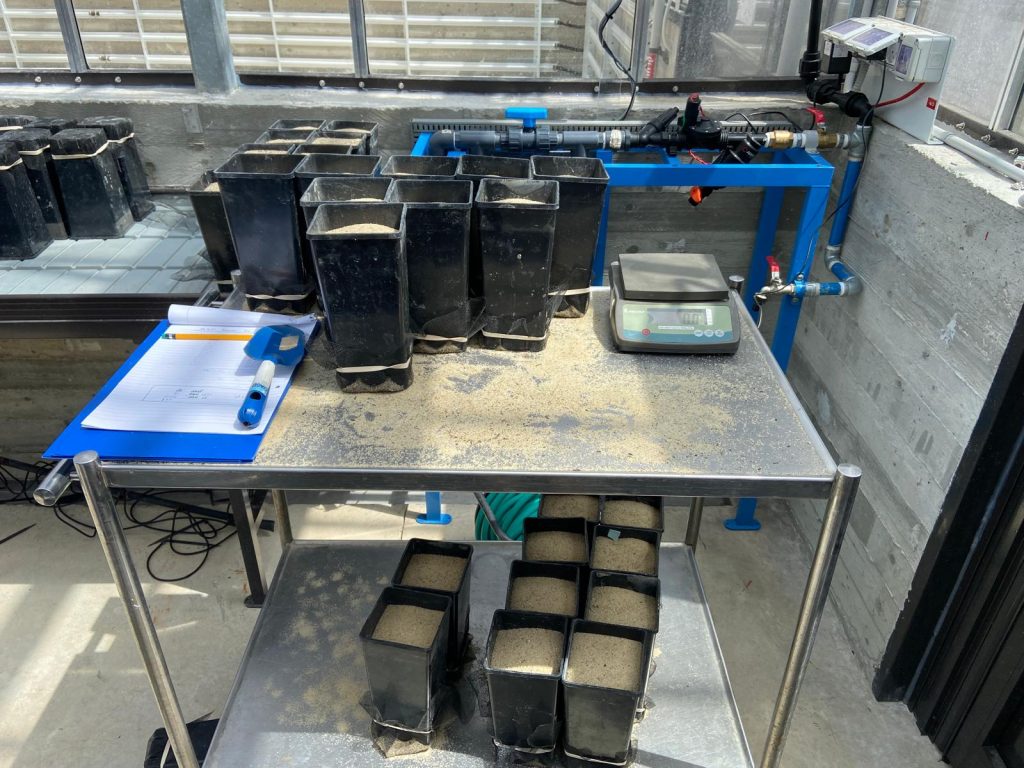
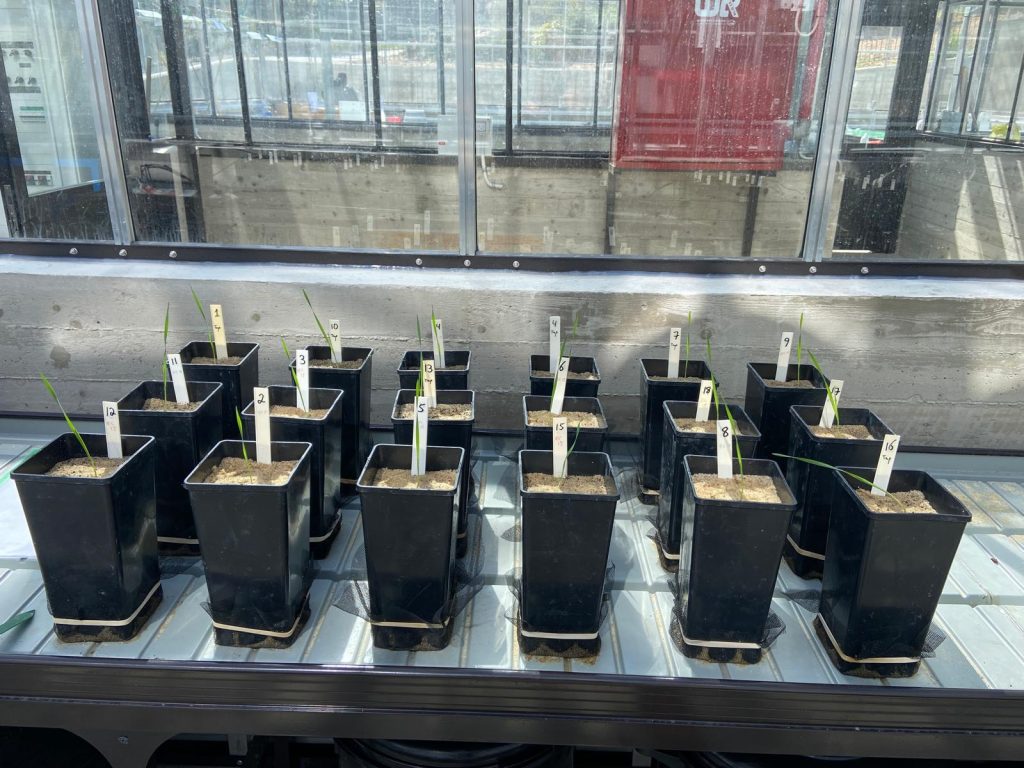
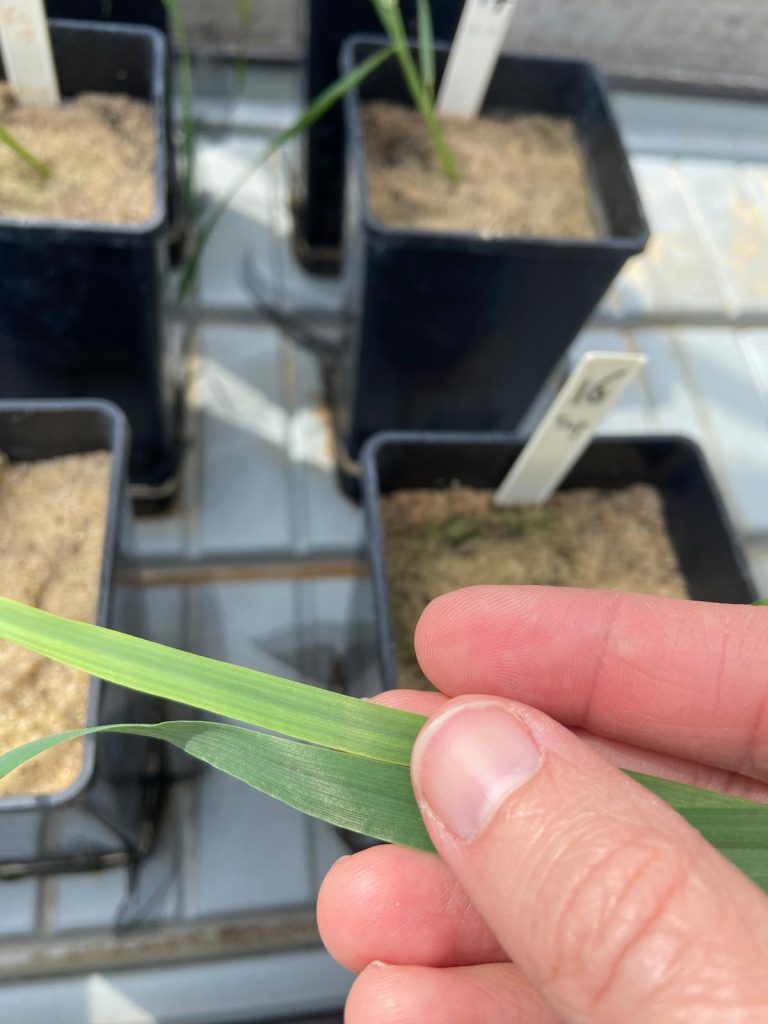
Between February and April 2025, the research team conducted a preliminary experiment to test the impact of three salinity treatments on wheat development. Wheat was cultivated in pots filled with sterilised inert soil, each treated with different salinity levels. The early results were visibly striking: as salinity increased, the wheat showed classic signs of stress — yellowing leaves and reduced growth, confirming the anticipated physiological response.
These findings lay the groundwork for the full-scale experiment, which will apply a randomised block design using soils of three different textures (light, medium, and heavy). Each soil group will be subjected to low and high contamination levels alongside control samples, all under optimal water and nutrient conditions. Data collected from this study will feed into WHEATWATCHER’s broader work on plant response modelling and sensor calibration.
By simulating soil contamination scenarios under controlled conditions, this task helps build the scientific basis for real-world monitoring tools. The outcomes will support the development of robust indicators of plant health and stress, which will be integrated into WHEATWATCHER’s sensor platforms and decision support tools — ultimately contributing to more resilient and sustainable wheat production systems.