Robotic-Based Sensing and Sampling
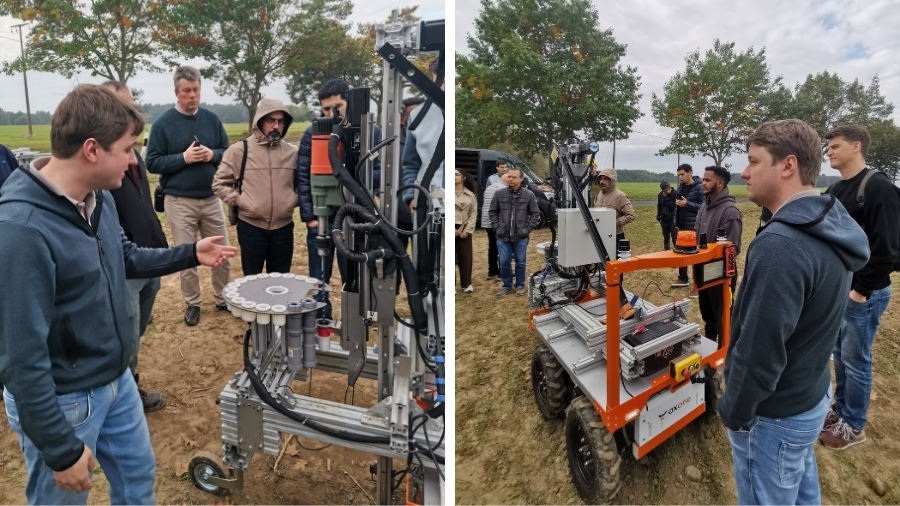
Advancing soil and crop monitoring requires technologies that can collect reliable information directly in agricultural fields. Within WHEATWATCHER, Exobotic Technologies is contributing its expertise in agricultural robotics to the development of an autonomous platform designed to combine soil and plant sampling with advanced sensing technologies.
By bringing together autonomous navigation, sampling tools and hyperspectral imaging, the platform aims to support more efficient field data collection and improve our understanding of how soil conditions influence crop health.
Bringing robotics into soil and crop monitoring
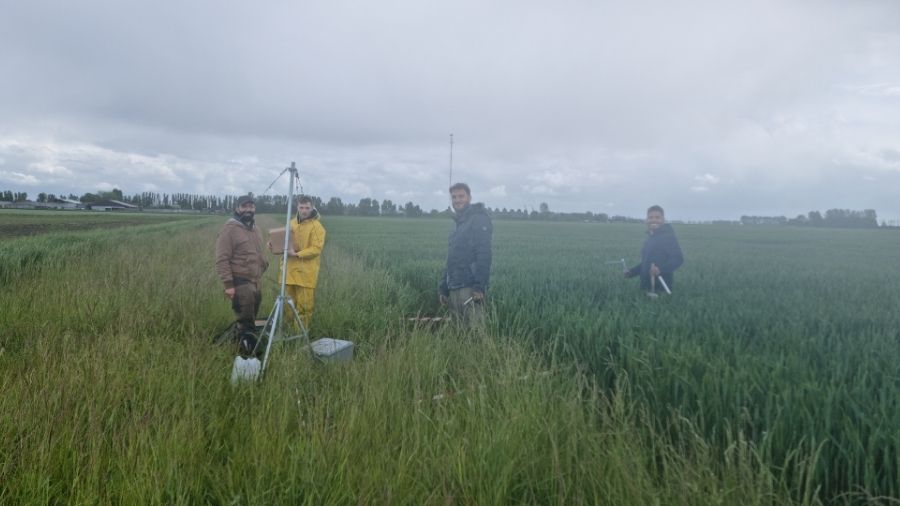
Traditional soil and plant sampling can be time-consuming and labour-intensive, particularly when researchers need to collect samples from multiple locations across large agricultural fields.
Robotic systems offer a different approach. By automating field navigation and sampling operations, they have the potential to increase sampling coverage, improve consistency and support more detailed assessments of soil and crop variability.
As part of Work Package 2 – On-site Sensor Platforms Development and Optimisation, WHEATWATCHER is developing complementary technologies for monitoring agricultural conditions.
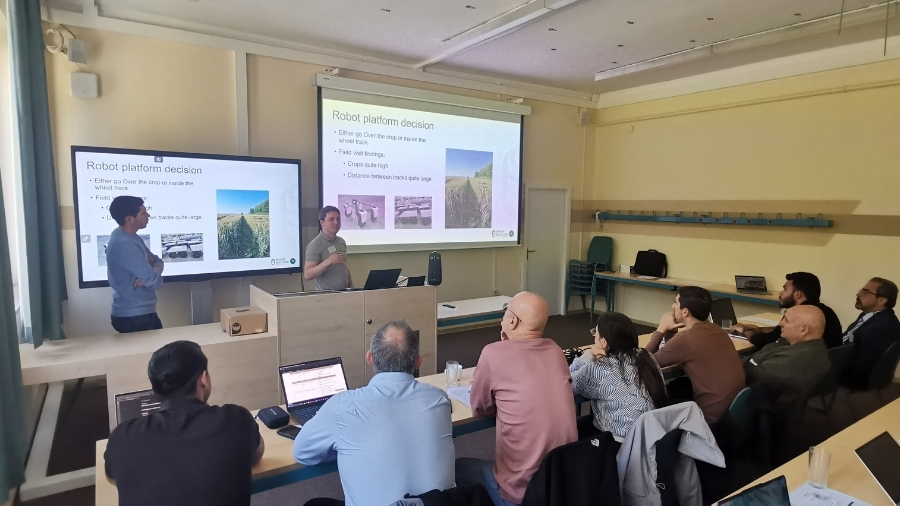
Among these is a mobile robotic platform for crop sensing and sampling, being adapted by Exobotic Technologies in collaboration with Ghent University (UGent) and Hahn-Schickard (HSG-IMIT).
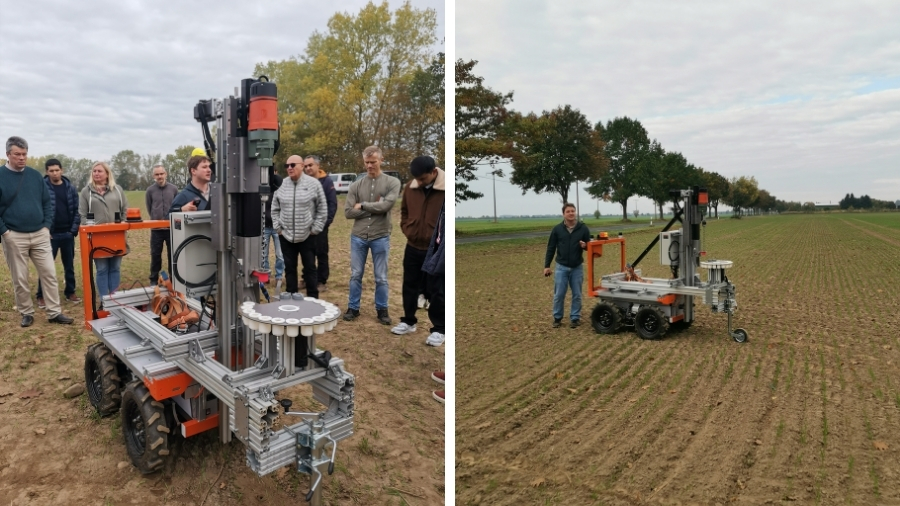
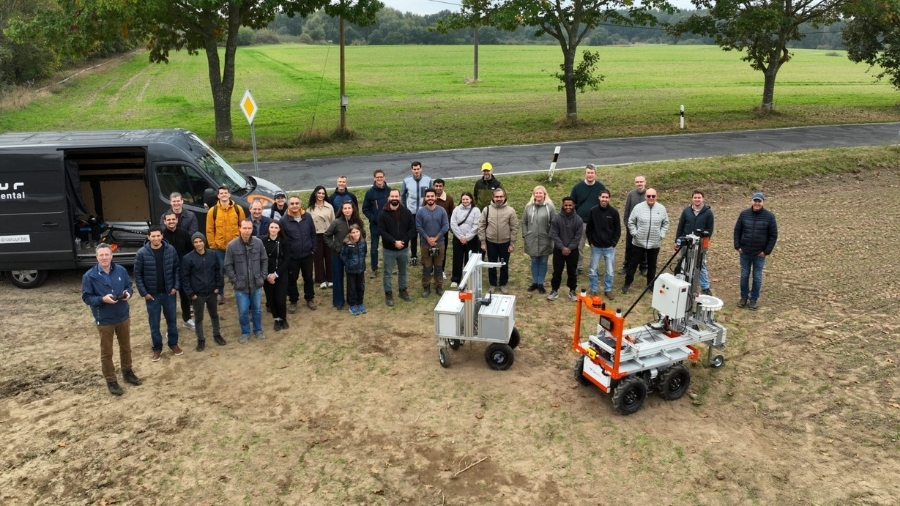
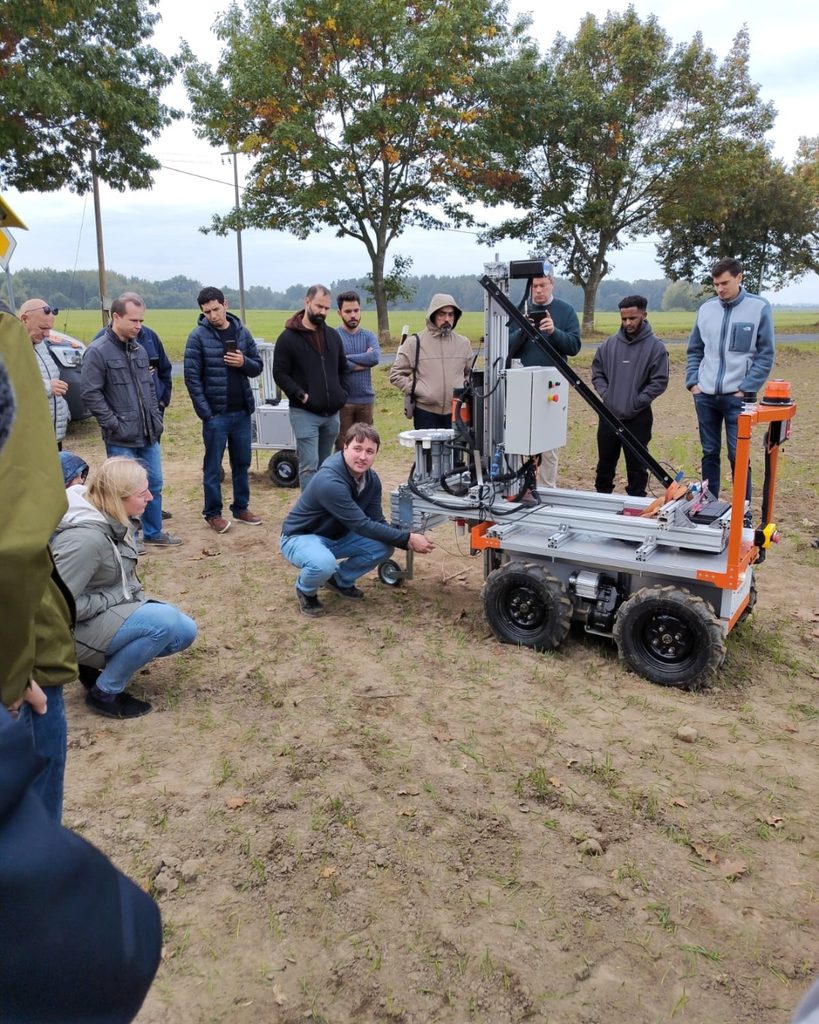
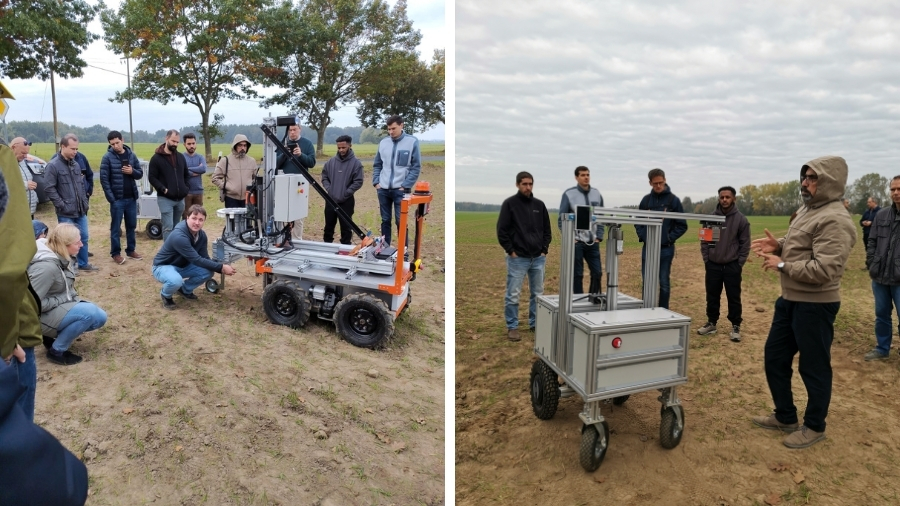
Exobotic’s autonomous robotic platform
Exobotic Technologies is a Belgian engineering company specialising in robotics, autonomous navigation, electromechanical design and AI applications.
Within WHEATWATCHER, the company is adapting its existing A2 agricultural robotic platform to support the project’s soil and crop monitoring requirements.
The robotic platform is designed to follow efficient sampling routes based on geographical coordinates generated through WHEATWATCHER’s automated mapping activities.
Together, these capabilities aim to connect the physical collection of soil and crop samples with digital observations of field conditions.
From autonomous sampling to data-driven agriculture
The robotic platform is also connected to WHEATWATCHER’s broader digital monitoring framework.
Under the project’s planned approach, automated soil and crop maps can help identify locations where more detailed observations or sampling are needed.
These locations can then guide the robot’s navigation and sampling activities.
Information collected through robotic sensing can subsequently contribute to WHEATWATCHER’s modelling, mapping and data integration activities, alongside measurements from stationary sensors, laboratory analyses and remote sensing systems.
The goal is to move towards a more coordinated monitoring process, where information gathered from different sources supports the identification and assessment of soil and crop conditions.
By automating parts of the fieldwork, the technology also has the potential to reduce repetitive manual operations and make detailed sampling campaigns more practical.
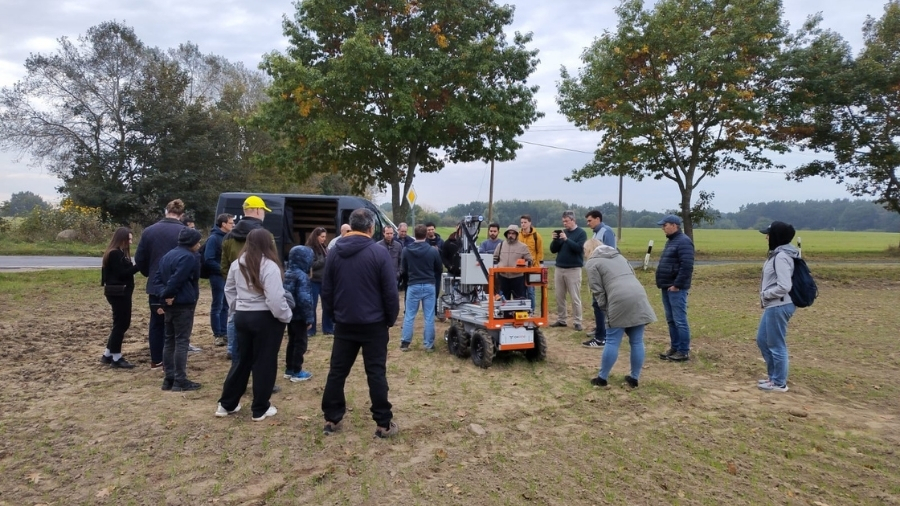
Developing robotic solutions for real agricultural conditions
Adapting a robotic platform for agricultural monitoring involves more than autonomous movement.
The system must combine reliable navigation with lightweight sampling mechanisms capable of operating under varying field conditions.
As part of WHEATWATCHER, Exobotic is developing dedicated soil and plant sampling modules designed to be integrated into its robotic systems.
These developments are intended to support autonomous sampling and enable researchers to gather more detailed information about variability within agricultural fields.
Ongoing development and validation will be important for assessing how the combined platform performs in real agricultural environments.
Supporting the future of sustainable wheat production
Exobotic’s contribution demonstrates how robotics can complement soil science, sensing technologies and digital agriculture.
By combining autonomous mobility, targeted sampling and advanced imaging, WHEATWATCHER is working towards a more integrated approach to monitoring soil and crop conditions.
The development of robotic-based sensing and sampling technologies represents an important step towards collecting more detailed field information and connecting it with the project’s wider monitoring and decision-support framework.
Through collaboration between robotics specialists, researchers and agricultural experts, WHEATWATCHER aims to transform technological innovation into practical tools that can contribute to healthier soils, better crop monitoring and more sustainable wheat production across Europe.