


From Lab to Data: CZU Measures Soil Properties for WHEATWATCHER
Czech University of Life Sciences Prague, CZU, partner of the WHEATWATCHER project, is carrying out laboratory analyses of soil samples as part of the project’s Task 3.2 activities.
This work supports WHEATWATCHER’s efforts to better understand soil conditions and develop reliable approaches for soil monitoring, assessment and data-driven agriculture.
Measuring soil properties in the laboratory
As part of the laboratory activities, CZU is analysing collected soil samples to determine important chemical and physical properties.
These analyses provide essential information for characterising soil samples collected within the project and help create a stronger scientific basis for soil health monitoring.
XRF spectroscopy under Task 3.2
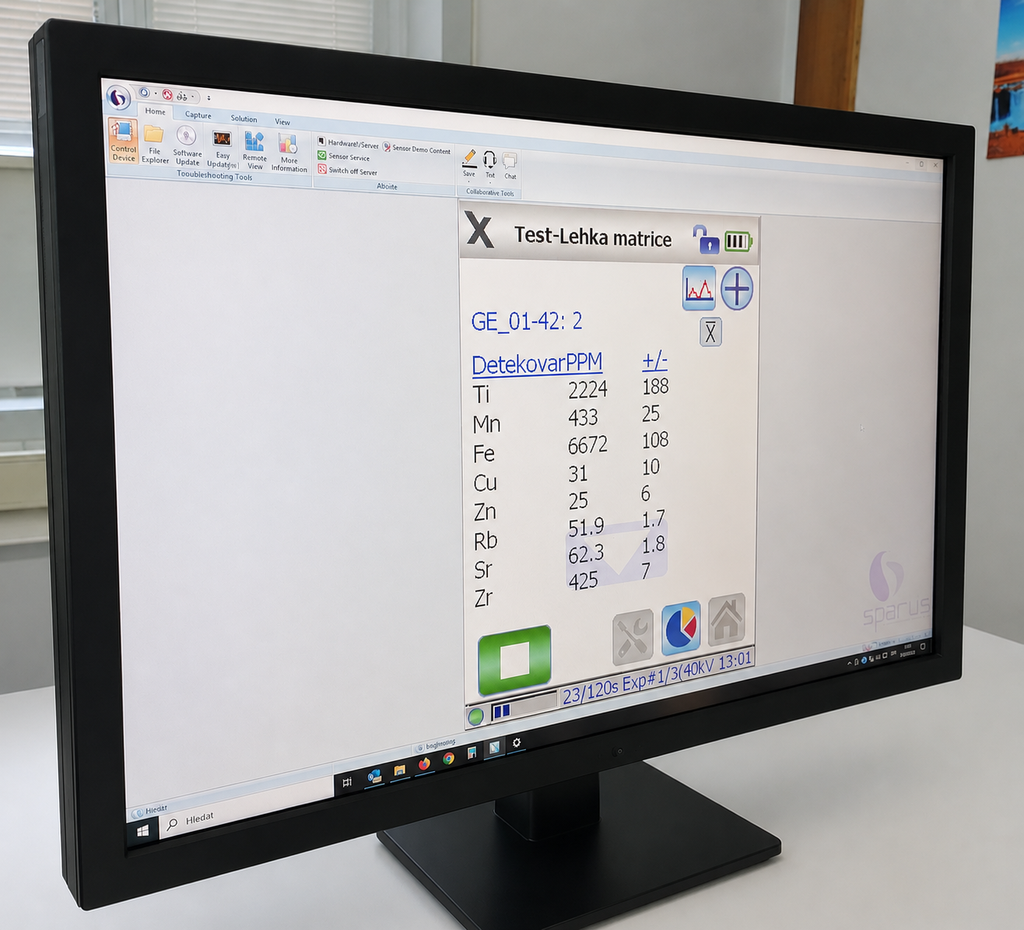
One of the methods used by CZU is X-ray fluorescence spectroscopy, also known as XRF.
XRF provides rapid elemental measurements, helping researchers identify and quantify elements present in soil samples. These measurements contribute to the characterisation of the collected samples and support a better understanding of soil composition.
By using XRF in the laboratory, the CZU team can generate valuable data that complement field measurements and other analytical activities within WHEATWATCHER.
From laboratory analysis to soil monitoring
Laboratory measurements play an important role in connecting field observations with reliable scientific data.
The information generated through XRF spectroscopy and other laboratory analyses can support the development, calibration and validation of soil monitoring approaches. This is especially important for a project such as WHEATWATCHER, where data from different sources are combined to improve understanding of soil and crop conditions.
Supporting WHEATWATCHER’s data-driven approach
WHEATWATCHER aims to advance soil and crop health monitoring through sensing technologies, laboratory analysis, data analytics and decision-support tools.
CZU’s laboratory work under Task 3.2 contributes directly to this approach by transforming soil samples into measurable data.
These activities help build the datasets needed to support reliable soil assessment, improve monitoring methods and strengthen the project’s wider work on sustainable wheat production.
Through this work, WHEATWATCHER continues to connect fieldwork, laboratory science and digital tools to support smarter, more informed agricultural decision-making.