


Setting up Glasshouse Experiment
WHEATWATCHER partner Tel Aviv University has started setting up a new glasshouse experiment for the project, building on previous controlled studies designed to better understand how different soil stressors affect wheat growth, soil health and crop development.
The new experiment is being prepared by the Tel Aviv University team, with Dr. Simon Futerman sharing updates from the first stages of the setup. The experiment has now officially started with the seeding of the plant material in pots, marking the beginning of a new phase of controlled observation and data collection.
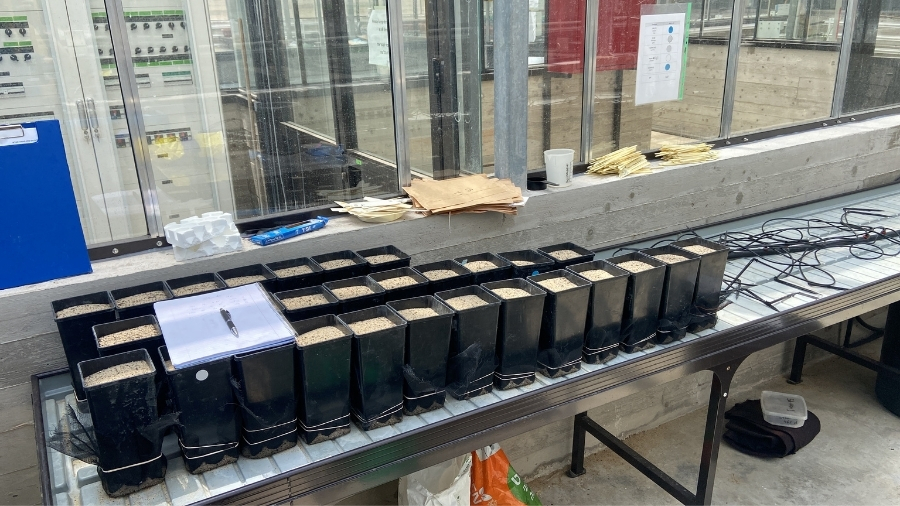
Preparing the experimental pots
The glasshouse experiment was set up using a similar method to the previous year’s work.
Each pot was filled with an exact amount of sand. Compost was then weighed, added to the sand and mixed carefully before the mixture was poured into the pots.
For the microplastic treatments, plastics were added to the sand and compost mixture according to the experimental design before being placed into the pots.
This controlled preparation process is important because it ensures that the different treatments can be compared more accurately throughout the experiment.
Testing different soil stressors
The new glasshouse experiment includes several treatment types designed to help researchers study how wheat responds to different soil conditions and stressors.
The experimental setup includes:
- Four TPH treatments
- Three microplastic treatments
- One salinity treatment
- One control treatment
TPH, or Total Petroleum Hydrocarbons, is used to study the effect of petroleum-related contamination. Microplastic treatments help investigate the impact of plastic particles in the soil environment, while the salinity treatment focuses on salt-related stress.
The control treatment provides a baseline for comparison, helping researchers understand how wheat develops under standard conditions compared to the different stress treatments.
Preparing the salinity treatment
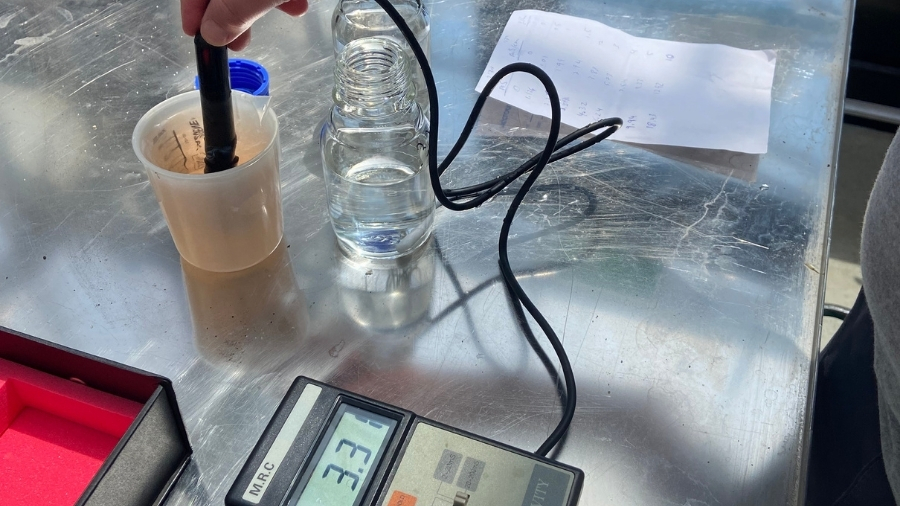
During the setup, the team also prepared barrels for watering the pots included in the salinity treatment.
An electrical conductivity meter was used throughout the process to reach the exact EC levels required for the experiment. This step helps ensure that the salinity treatment is applied in a controlled and consistent way.
Accurate preparation of the salinity treatment is essential for studying how salt stress may affect wheat growth, soil conditions and plant development.
Microbiome sampling during the setup
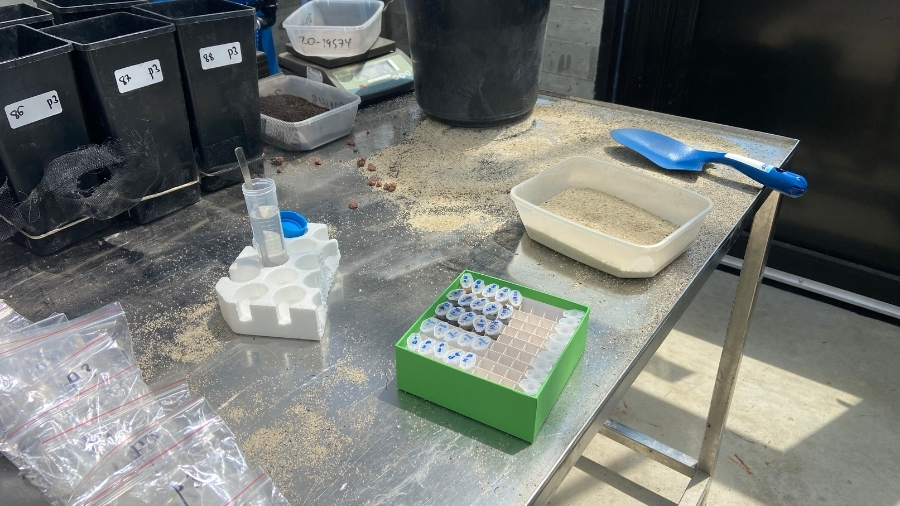
Microbiome sampling was also carried out during the preparation of the experiment.
This sampling aims to trace the different microbiome sources present in the experimental setup. Samples were collected from several materials and sources, including:
- Soil
- Compost
- Soil mixed with compost
- Microplastic
- TPH
- Irrigation water
- Salinity treatment irrigation water
- Seeds
By collecting microbiome samples at the setup stage, the team can better understand the biological background of the experiment and how different materials may influence microbial communities over time.
Why the glasshouse experiment matters
Controlled glasshouse experiments are an important part of WHEATWATCHER’s research approach.
They allow researchers to study specific soil and crop stressors under monitored conditions, helping create reference data that can later support sensor development, model validation and field interpretation.
In real agricultural environments, several factors can affect soil and crop conditions at the same time. A glasshouse setup makes it possible to observe selected stressors more clearly and understand their potential effects on wheat growth and soil health.
Supporting WHEATWATCHER’s wider monitoring approach
The new glasshouse experiment contributes to WHEATWATCHER’s wider goal of connecting soil, plant and environmental data into useful information for agriculture.
By studying TPH, microplastics, salinity and control conditions in a controlled setting, the project can generate valuable data that supports the development of monitoring tools, predictive models and decision-support approaches.
As the experiment progresses, the Tel Aviv University team will continue documenting the process and collecting visual material. These updates will help communicate the scientific work behind WHEATWATCHER and show how controlled experiments contribute to smarter, more sustainable wheat production systems.
Through this work, WHEATWATCHER continues to build the scientific foundation for better soil health assessment, earlier detection of stress factors and more informed agricultural decision-making.