


From Nestos pilot site to data insights: WHEATWATCHER hits the ground in Greece
Last month, the WHEATWATCHER project carried out a major field campaign at its Greek pilot site, located in the heart of Eastern Macedonia and Thrace, near Nestos river. This campaign marks a crucial step in our mission to build next-generation tools for smart soil monitoring and sustainable wheat production across Europe.
Led by ena Development Consultants, the pilot site hosted an intensive sampling and mobile sensing campaign coordinated in collaboration with Ghent University and our scientific coordinator Antonis Morellos.
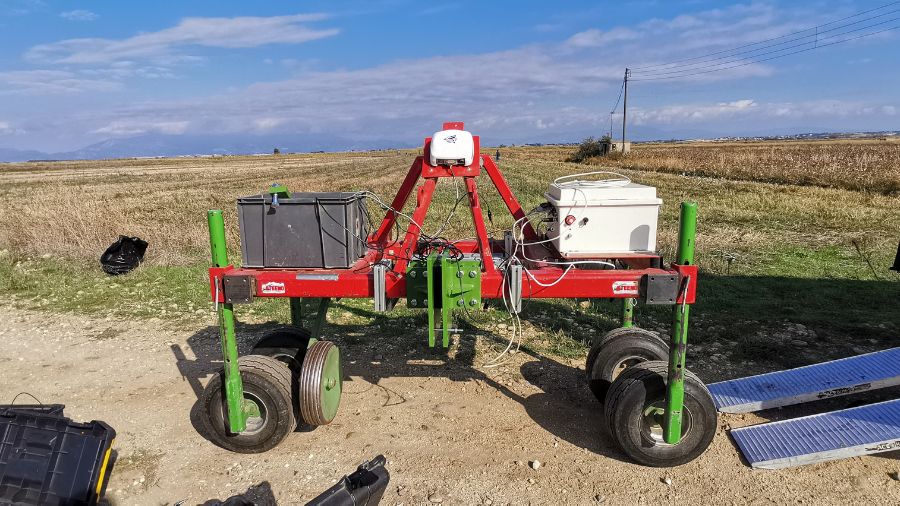
The highlight of the campaign was the deployment of the mobile sensing platform developed by Ghent University — a vehicle-mounted system equipped with visible and near-infrared (vis–NIR) spectroscopy and gamma-ray sensors. As the platform moved through the fields, it continuously mapped key soil properties such as nutrient availability, moisture levels, and potential contamination indicators.
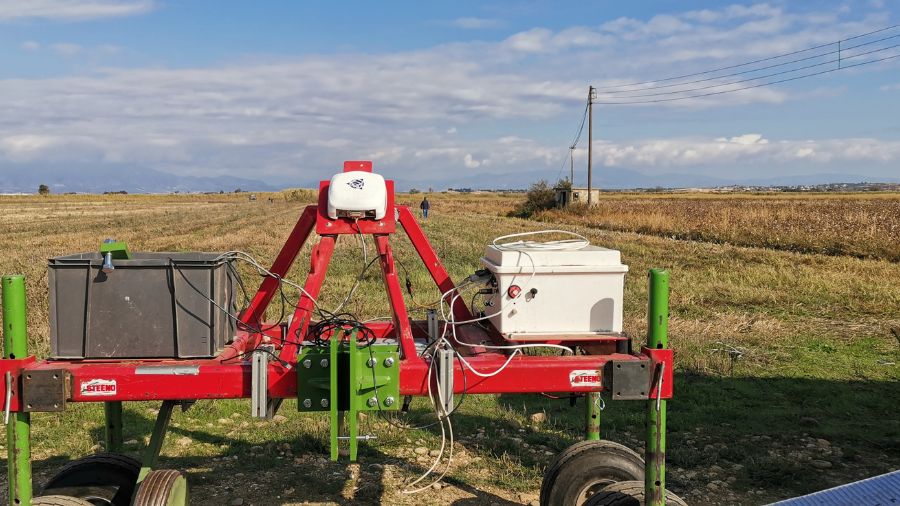
To complement this real-time scanning, the team also collected soil samples manually from across the field. These samples will be sent to Czech University of Life Sciences (CZU), where they will support the development of a spectral soil library, a foundational element of WHEATWATCHER’s precision soil assessment toolkit.
This hands-on campaign showcases how traditional agricultural expertise, when paired with cutting-edge sensing and data science, can deliver real-time, actionable insights to support farmers, researchers, and policymakers. The data collected in Nestos will feed into advanced models for nutrient management, soil contamination detection, and crop productivity forecasting.
This isn’t just about data, it’s about building resilience, promoting food safety, and enabling smarter land stewardship from the ground up.