


INTERVIEW: Dr. Panos Panagos, Scientific / Research Officer – Project Leader of the EU Soil Observatory
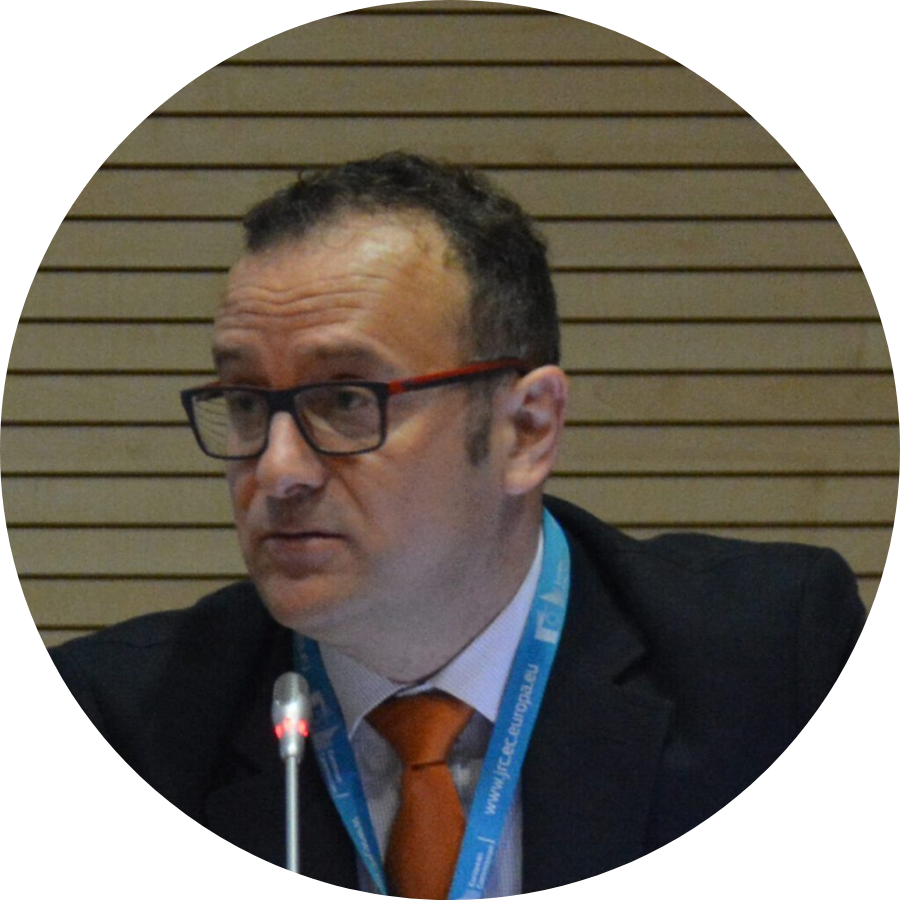
Dr. Panos Panagos, Scientific / Research Officer – Project Leader of the EU Soil Observatory, brings to WHEATWATCHER a wealth of knowledge in soil science, data management, and European policy. In this exclusive interview, he shares his insights on the future of digital soil monitoring, the challenges of translating data into action, and the innovations set to reshape the soil and agriculture landscape over the next decade.
Mr Panagos, the European Soil Data Centre and EU Soil Observatory work has contributed very much to monitoring soil health and relevant policy. How do you see the progress of integrated digital monitoring systems, like those to be developed in WHEATWATCHER, in supporting soil health management and the Soil Mission’s goals?
Dr. Panos Panagos: For me, integrated digital soil monitoring systems should include innovative, advanced technological solutions that collect a vast amount of data in the field, make them available to machine learning tools, and translate them into actionable insights for farmers and landowners. Currently, there are some applications of such digital tools, but we lack a scale-up to massive applications. In practice, we can see tools being applied to specific fields, such as those cultivating maize in Belgium, and for specific practices (e.g., fertilization). We need these tools to be transferable to other regions and applications, and not restricted to certain areas. Additionally, within the Soil Mission, it is foreseen that new, innovative methods and data streams will change the paradigm of soil monitoring from the classical approach (e.g., soil surveys) to new, innovative forms of monitoring, such as precision agriculture, spectral applications, Hyperspectral and Multispectral Remote, and remote sensing applications. I am expecting that Soil Mission projects as WHEATWATCHER will have an impact and will make a change in increasing also the competitiveness of EU Agriculture. The cost barriers for farmers and landowners should be overcome.
The EU Soil Observatory provides both reference data and knowledge at EU-level for all matters relating to soil. What are the biggest challenges in translating complex data into actionable insights for farmers and policy makers?
Dr. Panos Panagos: The EU Soil Observatory is the reference point for data and knowledge on soil-related topics at the European scale. However, data in itself needs to have additional value and be translated into knowledge. Within the Soil Mission, knowledge management from data is one of the priorities. As a first step, we need more scientific insights, such as peer-reviewed research, that can translate data into knowledge. As a second step, we need a dissemination mechanism that can propagate this scientific knowledge into actions and make it accessible to various stakeholders, including farmers, landowners, private companies, and policymakers. The biggest challenge in translating data into actions at the EU scale is the huge variety of pedoclimatic conditions across the EU, which means that one solution does not fit all. Furthermore, the adoption of management practices depends heavily on traditional attitudes among farmers. Effective communication is also crucial in translating knowledge into actions. In all Soil Mission projects, there is a dedicated communication team expected to reach different stakeholders using innovative methods and maximize the outputs. However, we lack a large-scale movement, similar to “Save Soil”, that can have a significant impact and drive real change in the adoption of solutions.
With several hundreds peer-reviewed publications and recognition as a JRC officer and highly cited researcher, what key advances in soil data science or monitoring technologies excite you mostly for the next 5–10 years?
Dr. Panos Panagos: A primary challenge is the integration of soil data with other disciplines, such as climate change, food security, human health, hydrology, and water resilience. As soil is a transversal component that provides numerous ecosystem services, we also need to make soil science a discipline that is better connected to all major global challenges. A key aspect over the next 5-10 years is ensuring open access to data for all scientists. A second challenge is the development of innovative monitoring techniques that go beyond traditional methods and produce a vast amount of data and knowledge at all scales. A third challenge is the successful implementation of Living Labs, which will provide practical solutions on the ground that can be widely adopted at all scales. Finally, I also expect that modeling will advance in understanding and better simulating Soil-Plant-Climate interactions. In addition to these four challenges, I foresee significant advances driven by technological innovations. For example, the application of Machine Learning and Artificial Intelligence (AI) is likely to revolutionize soil monitoring and improve soil health. The Digital Soil Mapping revolutionized traditional mapping methods 20 years ago, and I expect an order of magnitude change from AI compared to Digital Soil Mapping, leading to even more significant breakthroughs in the field.
Stay tuned to WHEATWATCHER for more insights, interviews, and innovations as we work toward healthier soils and a more sustainable agricultural future.